12 June 2006

"Artsy" Photos from our Trip

I saved some of the most interesting photos from our vacation for this post. Corinne took all of these, using her keen eye and photographic talents. They are unaltered, straight from the camera.


Flowers at a farmstand near my parents


Two kinds of cabbage starts, at that same farmstand


NJ tomatoes, ready for purchase


A snail that Corinne discovered in Shawn & Liz's backyard in MA


We're thinking of framing some of these for our house. Hope you enjoy!

- Mike (& Corinne)

11 June 2006

East Coast Vacation(?)

In the last post, we talked about running out of time to really do what we wanted in the garden. The reason we ran out of time was that just 3 days after finishing all of the planting, we were leaving for a 10 day vacation. (Not the best timing, of course...)

We just came back, and now we're ready for another vacation! This trip back to the East Coast - NJ, Boston - was fun, but it wasn't exactly relaxing.


Some stats from the trip:
10 days. 9 days of rain.
5,000 miles (11 hours) in a plane. 1,000 miles in a car.
1 red-eye flight.
~40 people visited.
Saw 6 states; slept in 3.
4 liters of diet coke and 2 rolls of Mentos.
2 snails.
11 quarts of local strawberries.
3 quarts of the most awesome ice cream.


We spent the first half of the trip in NJ staying with my parents, visiting with various relatives almost every day. Thank goodness they volunteered to drive us around or we'd be even more worn out!


Visiting my cousin in Jersey City. This was one of many family day trips during the first half of the 10 days. That's Michelle, my sister in-law, next to me. She's 6 months pregnant with TWINS! As Drew said, I'll soon be "Uncle Uncle Mike".
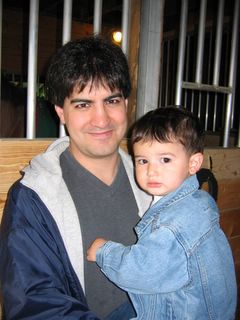

After our 5 days in NJ, we headed north to spend a few days with Stef, Serg & Diego in NH. Their horse Lacrosse was getting ready to foal, so I helped Serg install a network video camera in the stall so that Stef could monitor her progress. I guess that's what happens when you combine a nerd with an equestrian.
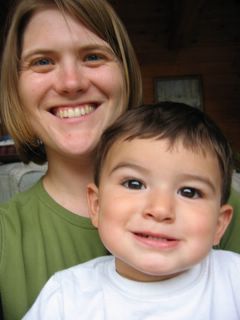

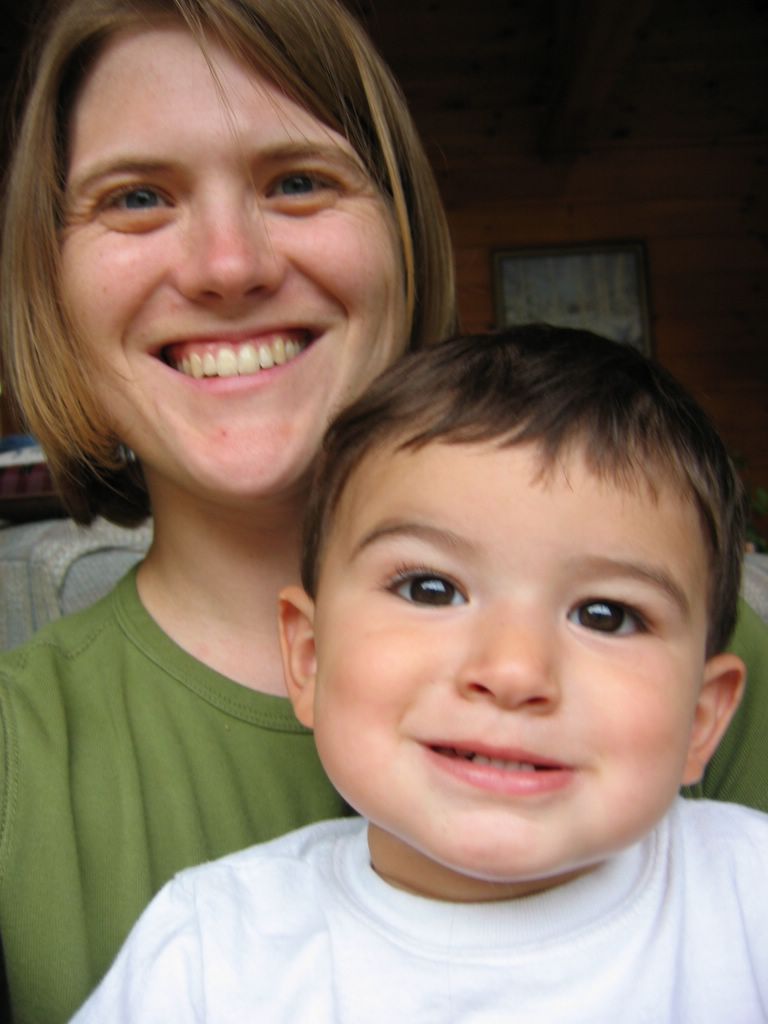
Corinne & Diego. We discovered that if we flipped the camera display around so that he could see himself, he was much more interested. :) But of course that means he's not quite looking at the lens.
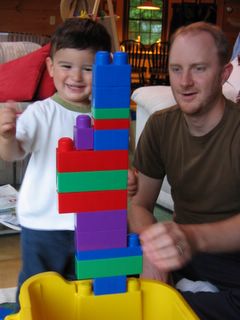
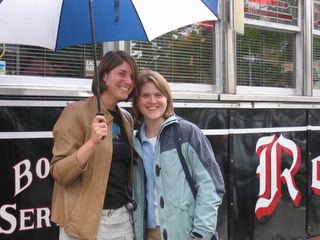


After NH, we headed down to Boston for 3 days, staying with our friends Becky and Gordon. It just so happened that Corinne's cousin Tamara moved to Boston shortly after we left, so we got a chance to spend a morning with her.


MIT Reunion, the original reason for the whole trip in the first place. Here I am at Tech Games with Dennis, showing my gang colors. (Not.)
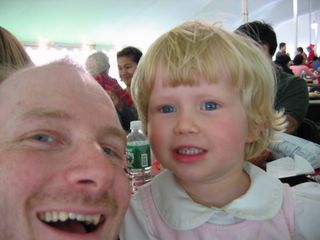

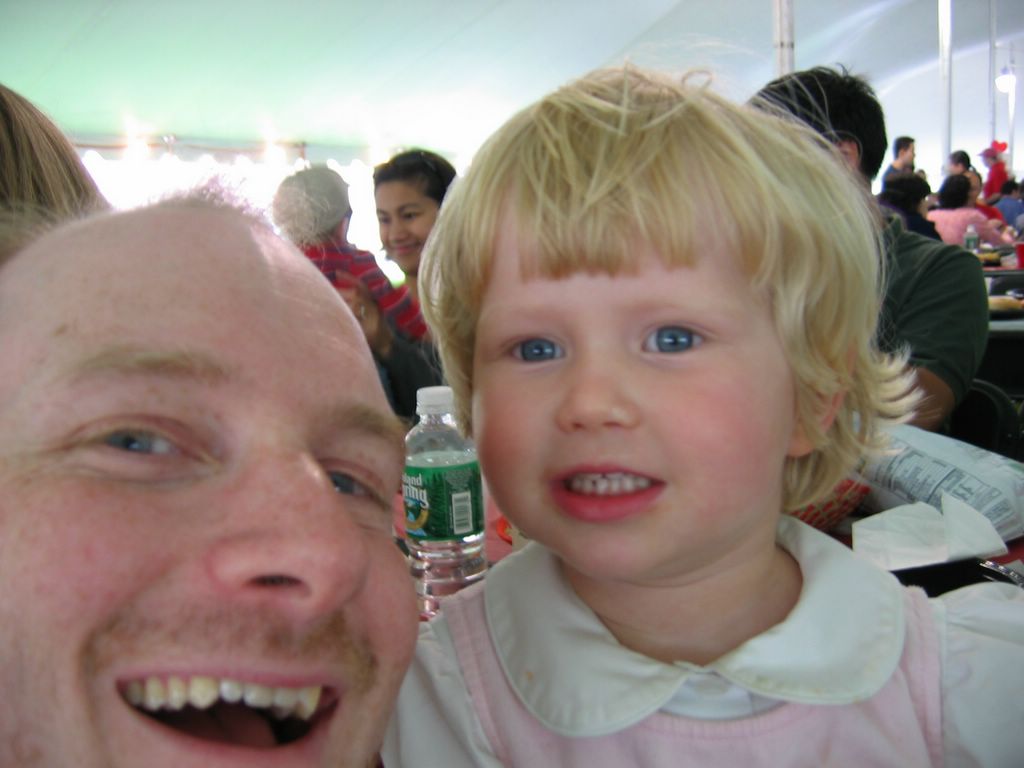
Mike & Abigail, Dennis & Sarah's 3-year old.

And last but not least, the infamous Diet Coke + Mentos activity. If you haven't heard about this phenomenon, Scientific American has an article describing the chemical reaction. And being the tech folks we are, we decided to try it for ourselves. Here's the video of our two "experiments":
Our Diet Coke + Mentos Video

This post is really just a sampling of our trip; we visited way more folks than we could possibly include here, both family and friends. The next time we take a trip back east, we're going to try to make it a bit more relaxed!

- Mike (& Corinne)

01 June 2006

Weeding and Tilling and Planting, Oh My!

Last week marked the very beginnings of our garden experiment, but we really only had an opportunity to get a small portion of the work done. But Memorial Day weekend we really got things started.


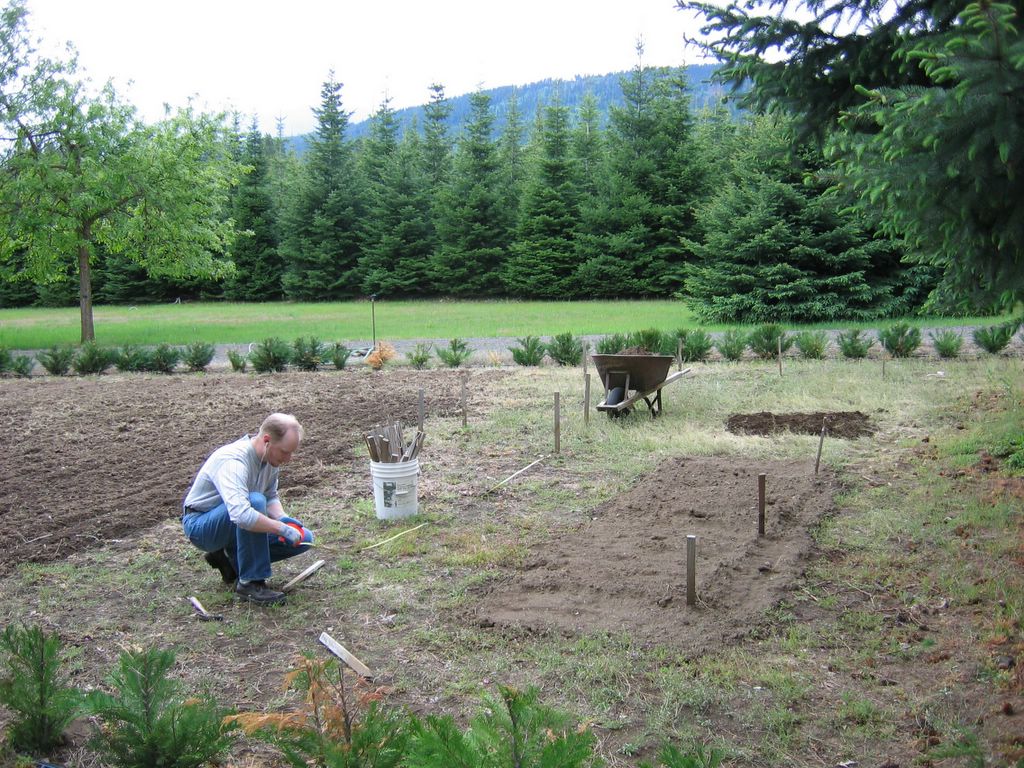
The second bed being marked. I had intended to hand-till the remaining 5 beds, just as I had with the first bed last week. However, half-way through the very first bed this weekend, I snapped my spading fork right in half! All of the ladies were very impressed. ;) In the end, the remaining beds were done using the rototiller, conventional-style.


The "finished" tomato bed. It's not actually finished, since we wanted to put in a better drip irrigation system in that bed (tomatoes don't like water on their leaves), but we just ran out of time.


The garden! In the short-term we'll be using a system of overhead sprinklers, with a soaker hose for the tomatoes. We also didn't have time to do any sort of "proper" animal protection, so we used what we could find around the shop.

Our vegetable garden now contains seeds or starts hoping to produce:

  • tomatoes (3 varieties)
  • peppers (2 varieties)
  • zucchini
  • cucumber
  • meculin salad mix
  • romaine lettuce
  • spinach
  • leeks
  • beets
  • potatoes
  • sunflowers (for ornamentation, not seeds)
  • marigolds (to deter deer)
  • herbs (cilantro, basil, parsley, oregano)

In addition to the work in the vegetable garden, Corinne is pretty excited about all of the flowers that we can now plant and enjoy. Of course, that means more weeding...


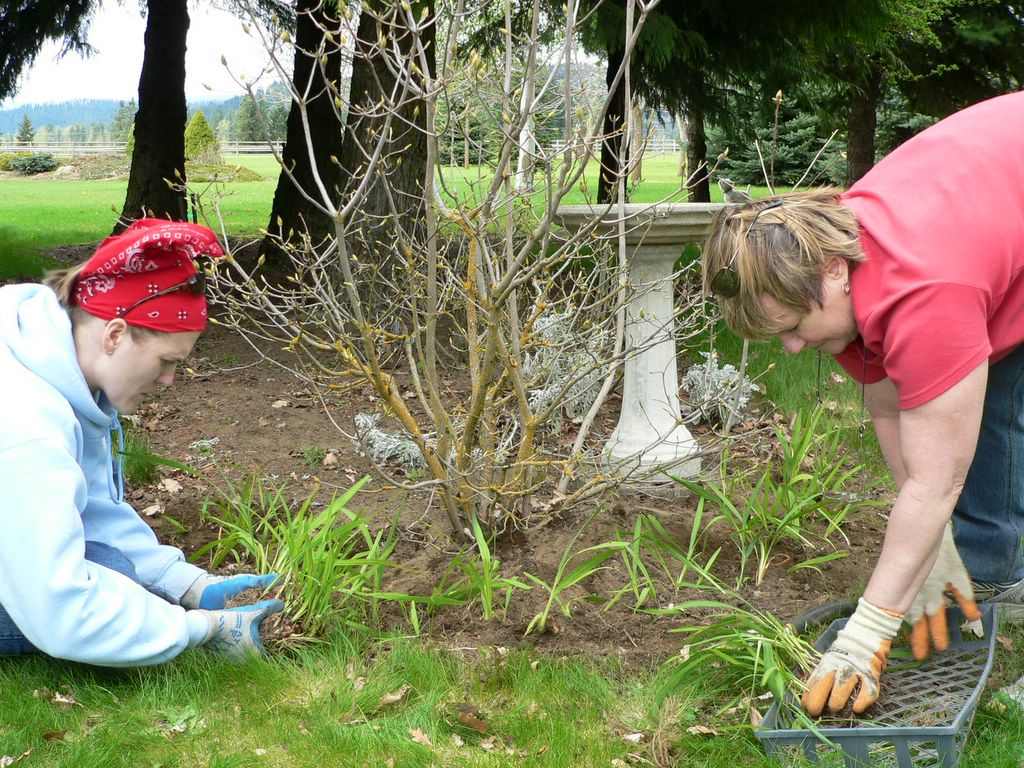
Corinne weeding around the berm.


Donna weeding the berm.


Hanging baskets of petunias. They really do make a difference in the look of the front of the house!

Updates on the garden as things progress (or don't). Wish us luck!

- Mike (& Corinne)

28 May 2006

Visitors all the way from Hood River!

Over Memorial Day Weekend, our friends Mark, Amy and Andrew (and their newborn Claire) came all the way from Hood River for a visit! For some reason Andrew thinks we live "way out there". We were happy he was able to make the long journey.


Andrew was very excited about all of our equipment, particularly the tractors and fancy lawn mower. He was so excited, in fact, that he wants to come out to mow our lawn sometime. We'll have to take him up on that offer!


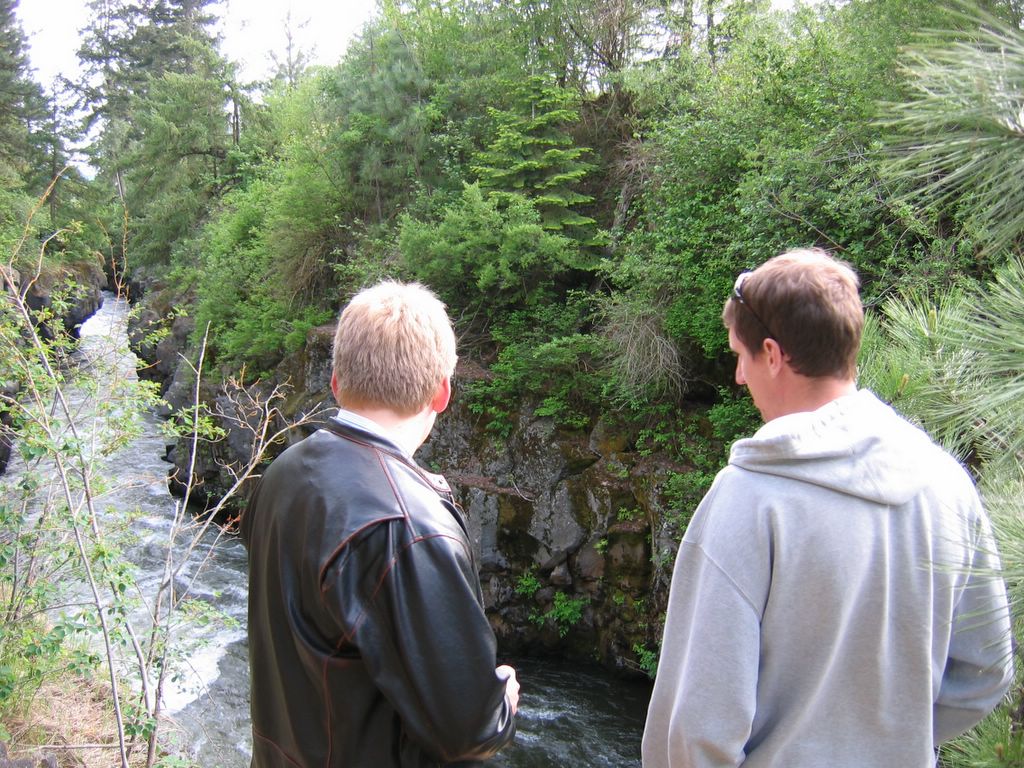
"Hey look, there goes Ridley down the river." Ridley, Andrew & Amy's golden retriever almost needed to be retrieved from the rapids.


What a cute family! Amy and Andrew, doting on their newborn, Claire.

- Mike (& Corinne)
21 May 2006

The Garden Experiment Begins

Both of us have always been interested in gardening. Perhaps it is the fantasy of fresh, chemical free, and "free" vegetables straight from your own yard; perhaps we like the idea of "living off of the land"; or maybe it's all of those fond memories of our childhood gardens. More than likely all of the above. Anyway, now we finally have enough room for a real garden!

In April and May we took a series of organic gardening classes from a local AmeriCorp member, Kji McIntyre. Topics in the class included: Propagation, seed selection and season extension; Garden design; and Bed preparation, cover crops and compost. The classes were very interesting and included hands-on so that we could (attempt to) replicate at home what we learned in the class. So now it was our turn...

In late April, we ordered some seeds from Seeds of Change, thanks to a gift certificate from Drew & Michelle. Shortly after they arrived, I planted some of the seeds in seed trays inside; believe it or not, the danger of frost in Trout Lake typically doesn't subside until mid- to late-May! This makes it difficult to grow certain crops without starting them inside, then moving them into a cold frame. (Thankfully, our property has a cold frame already built and installed!)

Now that at least some of the seeds are ready to be transplanted into the ground, and the last frost had likely already occurred, it was time to prepare the ground. We have a rather large section available for gardening, but we only plan to utilize a small portion this year, for several reasons:

  1. We don't really know what we're doing
  2. The countryside is full of wildlife, and wildlife is hungry
We see the evidence of both deer and gophers on a daily basis; for the gophers, it's mounds of dirt all across the yard; for the deer, it's droppings or the animals themselves. (The deer have already trampled one of the peonies we planted a few weeks ago...) It's a two-pronged assault: the deer eat from the top, and the gophers eat from the bottom. So rather than spend a lot of time, money and effort to feed the animals organic vegetables, we thought we'd use this year as an experiment.


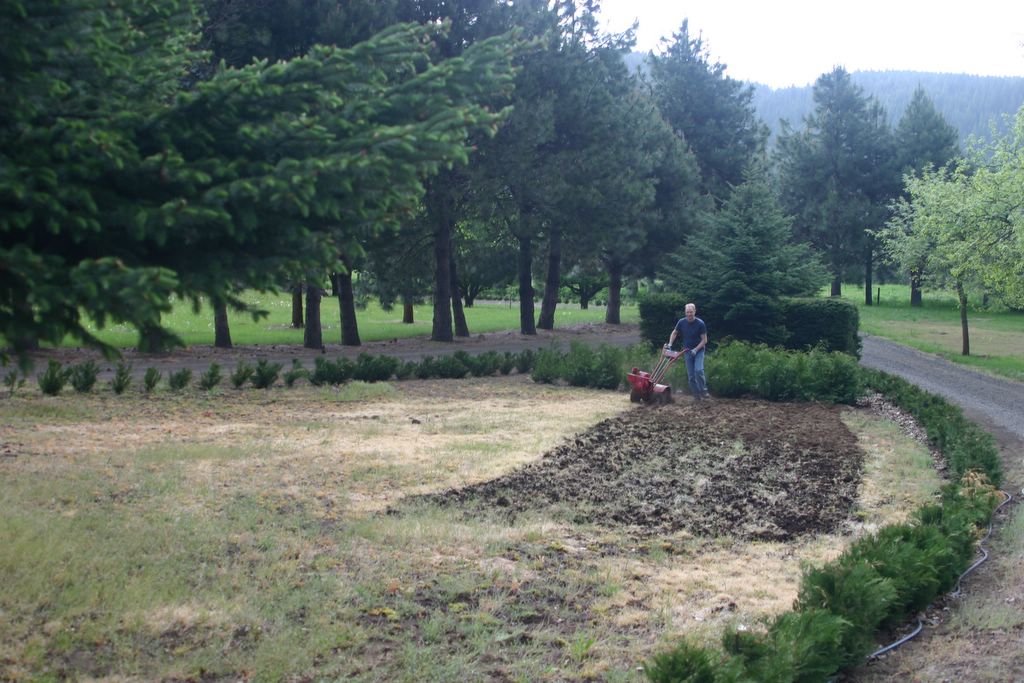
Thank goodness for modern machinery! Here I am tilling the section that we don't plant to harvest from this year, preparing to grow our summer cover crop: buckwheat. A good cover crop will prevent weeds from growing, make nutrients more available in the soil, and provide more organic material to the soil when they are incorporated (aka tilled in to the soil) at the end of the season.


One (mostly) finished bed! Unlike the cover crop section, this bed was tilled by hand using the "double dig" method. 4' x 14', this bed contains sunflowers, marigolds on both ends (supposedly deer don't like them), and a mesculin salad mix.

Next weekend: prepare the remaining beds, plant more seeds and seedlings, and irrigate!

- Mike (& Corinne)

18 May 2006

Magically Multiplying Maytag

When we bought the house, we also bought the washer/dryer that came with it - 1st generation Maytag front-loaders. Hurray, front-loaders! We noticed pretty quickly that clothes came cleaner in these machines than in any washer we'd previously owned.

We also noticed pretty quickly that the washer made a strange squeaking noise. "We should have somebody look at that," we said. Several weeks went by and the noise changed - from a periodic squeek to an irregular knocking sound. "That can't be good." So we decided to stop using it until we could figure out where the sound was coming from.

After tearing the washer apart, we had not identified the source, but we had determined that the noise was coming from somewhere inside the tub. It was time to call in a professional. So we loaded the washer up into our 1986 Dodge Pickup and drove it down to the "local" (25 miles away) appliance repair shop. After a week, they called us back with the bad news - it would be $500 in repairs, and that was just for the parts themselves. We called them back to tell them to just put it back together, and we would pick it up. The only reason we had stopped using the washer in the first place was that we thought if we fixed a simple problem we could prevent a catastrophic failure. Since we now knew that it was not a simple problem, bring on the catastrophic failure!

While in the shop picking up the washer, we turned to our right and saw: our washer. Only not our washer. Here was the exact same model and series washer, for sale used at the appliance shop for $250. So now we have two: one in the house washing clothes, and a backup in the machine shop. As Leif said, "You're collecting washers? You are now officially country folks."

- Mike (& Corinne)
16 May 2006

The Deer Thank Us

If you recall, in the aftermath of the bird rescue we removed the deer netting which caused the problem in the first place. Well, somehow the deer knew this.


Apparently this is what happens when you remove the deer netting...


Brave Mike faces the 4 deer alone and unarmed!

We don't think the netting was working anyway. (Or at least that's what we'd like to think.) We'll have to see what happens when we have a luscious garden with no fence.

- Mike (& Corinne)

15 May 2006

Spring Clausens Visit

Going from renters to 60-acre property owners is quite a change! Thankfully, the Clausens, the former owners and original creators of "River Ford Farm", have been extremely helpful and willing to pass on their vast knowledge to us! They recently made a day trip to visit their old homestead and help us prepare for the new season.

Irrigation System

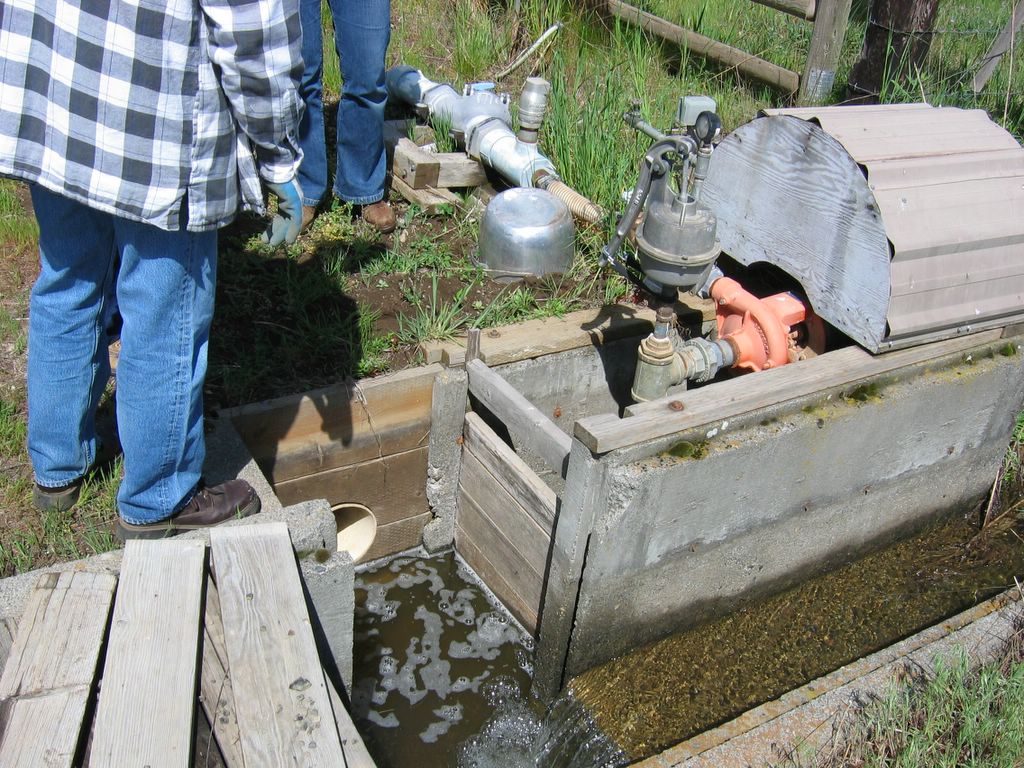
Learning the irrigation pump. The irrigation system is fairly extensive, and includes: a pump to extract water from the irrigation ditch and pressurize the system; underground PVC lines that run the complete length of the property; above-ground risers with connections for hand-lines; several sets of hand lines and wheel lines; and pop-up sprinklers on the lawn surrounding the house.

Trapping Gophers

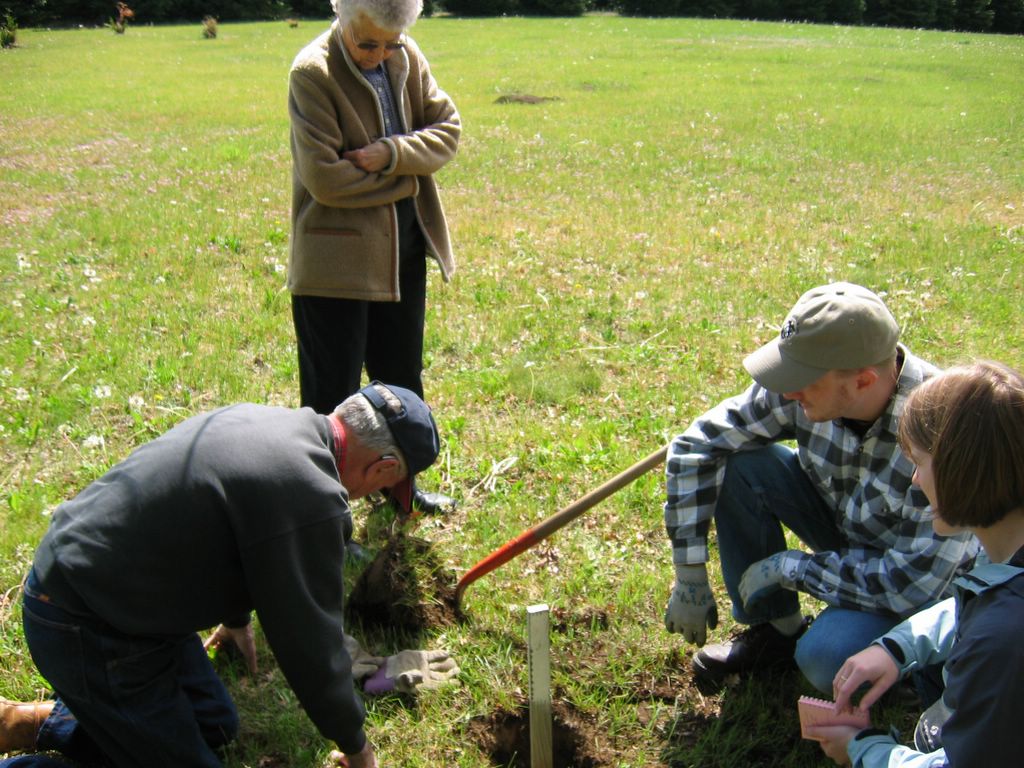
Setting a gopher trap. Our property is covered in dirt piles made by the pocket gophers. We're definitely learning from the masters here - one year they caught 100 gophers! We didn't catch any with our first two traps, but we're only just beginning.

Mending Fences

Yes, we're actually fixing a fence. Shortly before we moved in, an elk apparently misjudged the height of our rail fence and instead went straight through it. So one of the posts was broken at the base and needed to be replaced. So we had to first remove the stump of the existing post, which extended two feet below the ground and was secured at two levels by concrete. (This fence wasn't going anywhere!) So Vic helped us use the pneumatics on the small tractor to pull out the stump. Unfortunately, we have yet to find a suitable replacement post.

Walking the old Homestead

Of course, after all that work we had to make sure they got their fill of the old scenery.

Thanks, Vic and Phyllis! We look forward to your next visit!

- Mike (& Corinne)

08 May 2006

We Saved a Bird!

I was watering flowers last night when a robin chirped loudly and made me jump. When I looked up he was sitting in the bush right next to me. I looked closer and saw that he was tangled up in the netting that the previous owners had put on the bush to keep the deer from eating it. :(

I grabbed Mike. We proceeded to have a 10 minute "discussion" about the proper approach before settling on a plan of Mike holding the bird while I did the surgery. Mike held the bird while it was still attached to the bush. Then I cut a big circle of netting out so that we could move the bird out of the bush. Since we were losing the light, we took him to the front porch where there was better light. We spent another 30 minutes carefully cutting away the netting. His feet and wings were tangled, and his head was through two sections of net. Mike had to loosen his grip in a small area just enough that I could work on each little section for a while.

The robin alternated between periods of freaking out and trying to bite us and resting calmly while we worked. The robin nipped me once and so I promptly withdrew my hand and smacked poor Mike in the face.

Anyway, we think we got ALL of the netting off the bird. When we let him go, he took off right out of Mike's hands and flew away. So I think he escaped unharmed.


Mike holding the bird. You can see the netting.

I removed the netting from the bush this morning!

It certainly made for an interesting evening! We felt like heroes. :)

- Corinne (& Mike)

01 May 2006

The B&B & the County Hearing

About 2 weeks ago, we received a notice from the county that one of our neighbors had submitted a proposal to open a Bed & Breakfast, including "educational activities." According to county regulations, we were required to be notified since our property is within 300 ft of the property in question. The public hearing was scheduled for May 1st.

We like B&Bs, and will usually stay in a B&B when on vacation rather than even the fanciest of hotels. But what do we think about a B&B right across the street? And what about the "educational activities"?

The particular neighbor in question we had not yet met, so this notice came as a bit of a surprise (strike 1). The B&B would be located on our road, which is a dead-end road with a limited number of residents - and therefore limited auto traffic (strike 2). Furthermore, our property is directly between the B&B and the White Salmon River , increasing the likelihood of interlopers (strike 3?). After talking to a few neighbors whom we had met, we wrote a letter with a list of our specific concerns a decided to go to the hearing to present it in person.

The hearing was an interesting event, and we turned out to be the ONLY people to appear at the hearing other than the person who submitted the proposal. (There were two other letters sent to the planning committee on this issue.) I must admit it was a little awkward to meet the neighbor in question while at a meeting opposing her plans, but in the end everything worked out fine for all. Her proposal was approved, but with enough conditions to address all of our concerns. The most significant condition added was that the "conditional use permit" for her B&B is valid only for her; when the property is sold, the CUP expires. Since we are concerned about the commercialization of farmlands, this was a big issue for us. Once a B&B is established there, it is easier to expand and enlarge it in the future to the point where large-scale weddings and other social functions could end up across the street from us. That's not why we moved to the country! Now that the CUP does not go with the property if/when it is sold, the danger of that happening is greatly diminished.

Her goals for the B&B were to provide a small-scale educational and experiential atmosphere to teach farming and ranching. We wish her the best of luck with her plans!

- Mike (& Corinne)

29 April 2006

Corinne's birthday weekend

For Corinne's birthday, a contingency of her family came to visit to help us prepare for spring. They brought with them all sorts of flowers to plant around the yard, plus all those extra hands to help us weed and prune!


Dinner @Chez Mike & Corinne


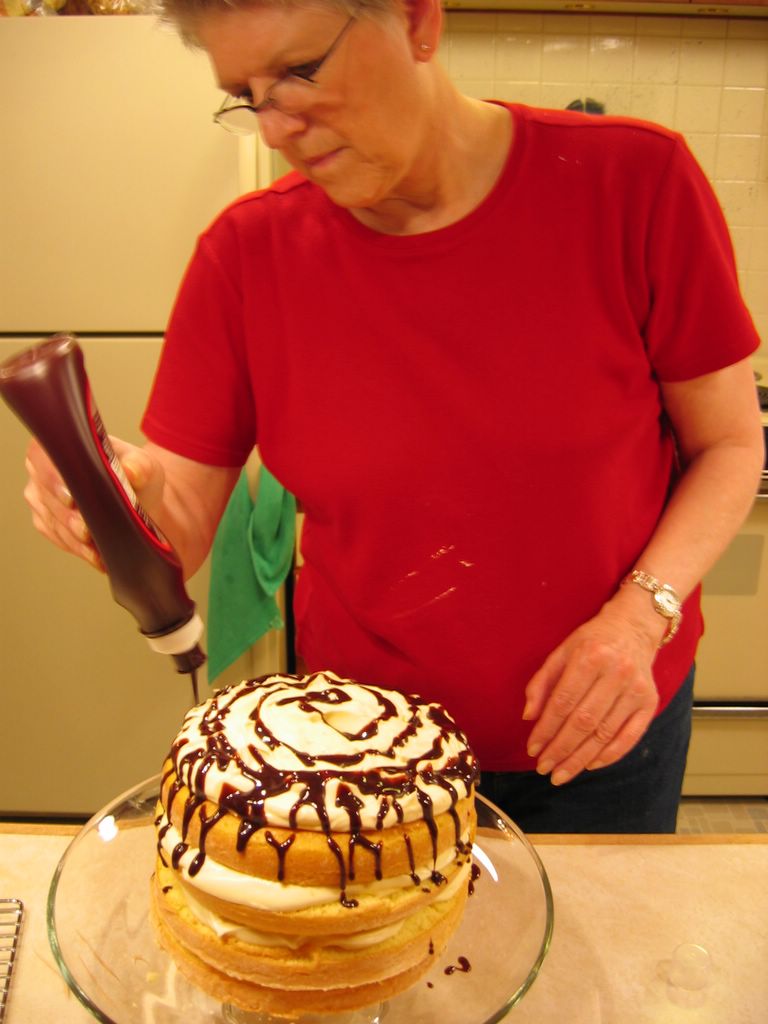
Donna's famous Boston Creme Pie! You have to make it the day before and let it sit in the fridge overnight.


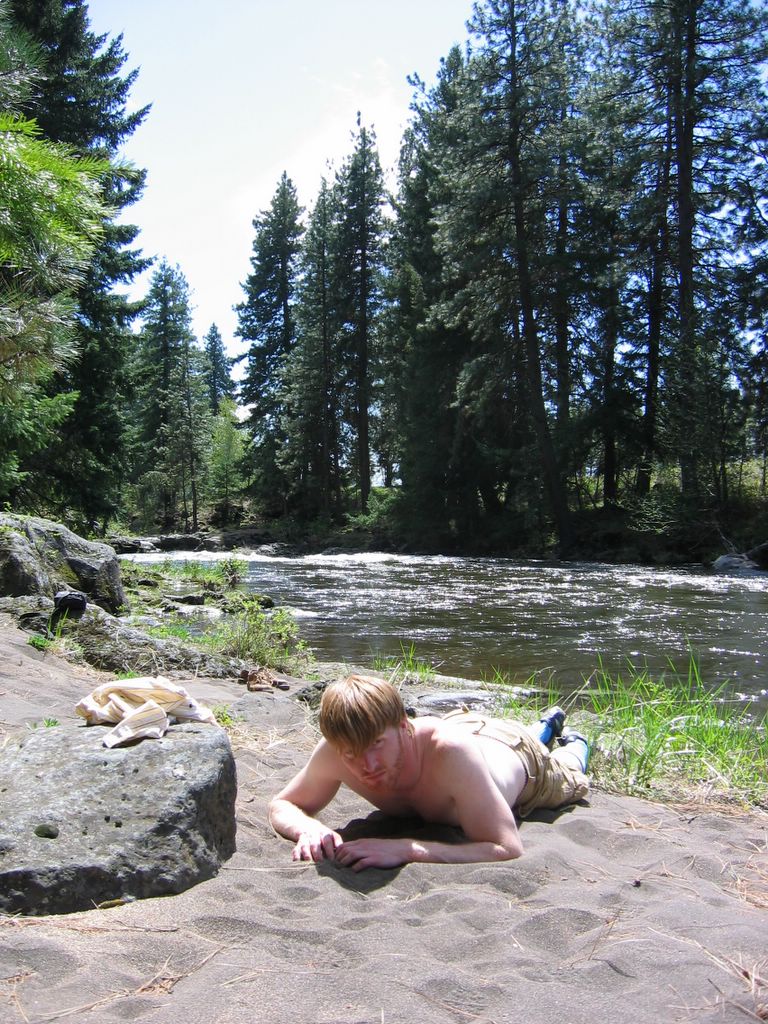
During a walk along the river, Corinne decided to "cool off". Boy, you can really tell that the river is glacier fed.


Loren, relaxing on the "beach".


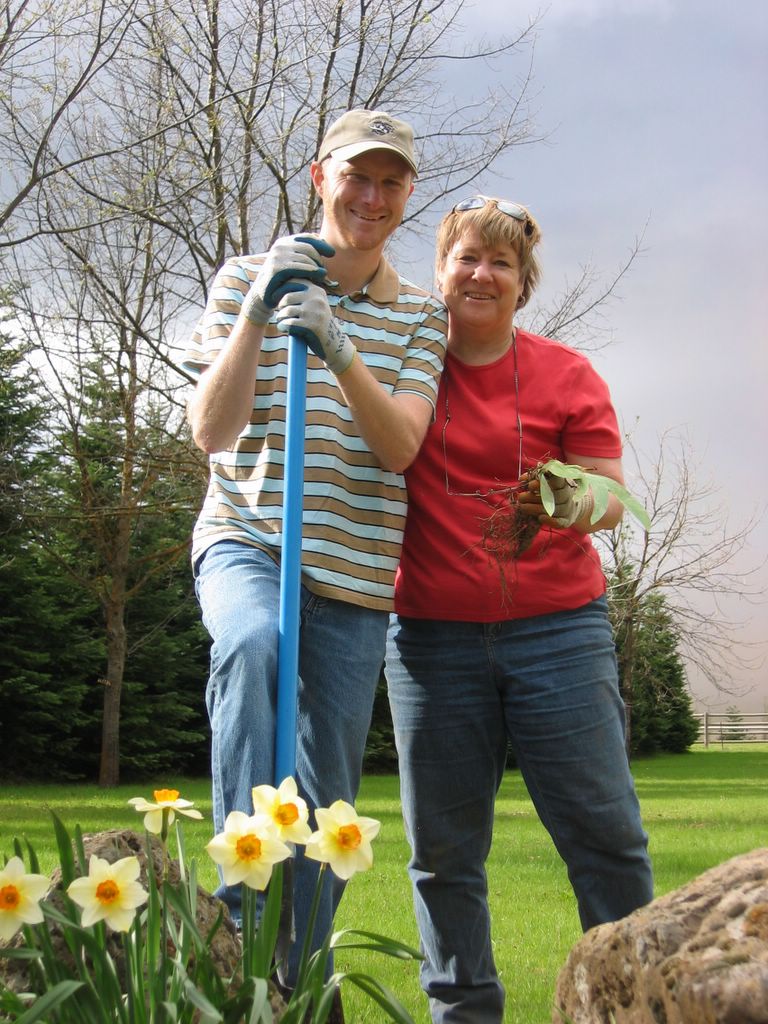
Planting the peonies in the burm.


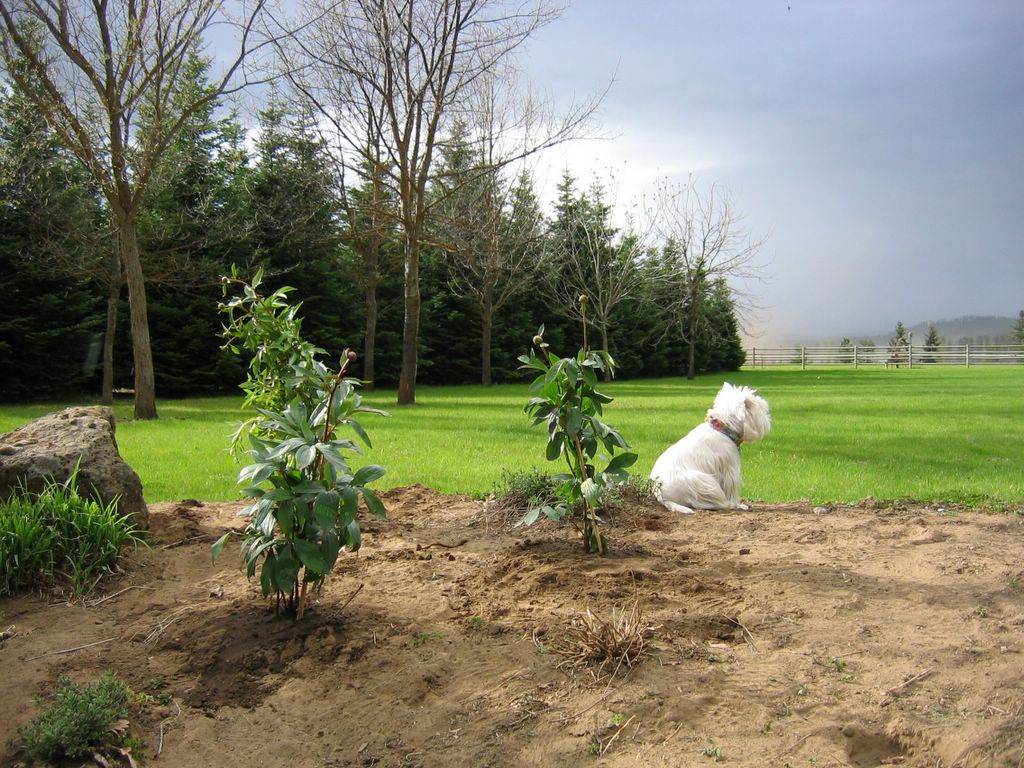
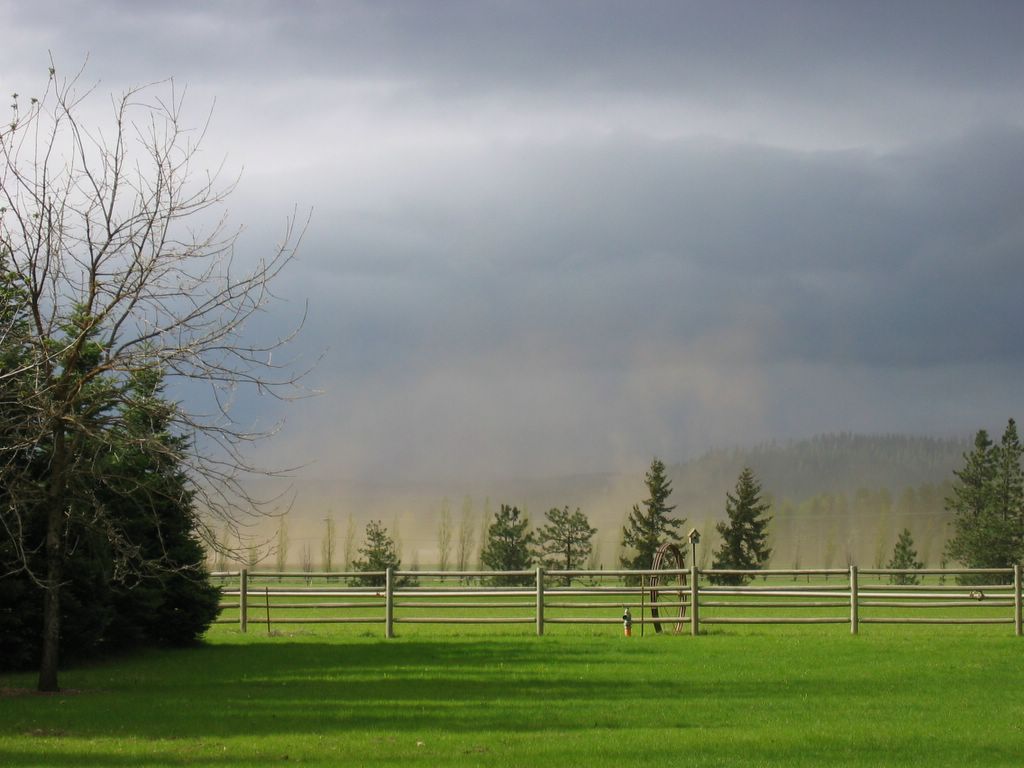
Chloe guarding the newly planted flowers. In the background you can see a small dust storm, since it hasn't rained in several weeks.


Dust storm on the field to the north. We eventually had to move inside until the worst of it passed.


Donna & Carol, pruning the vine roses.


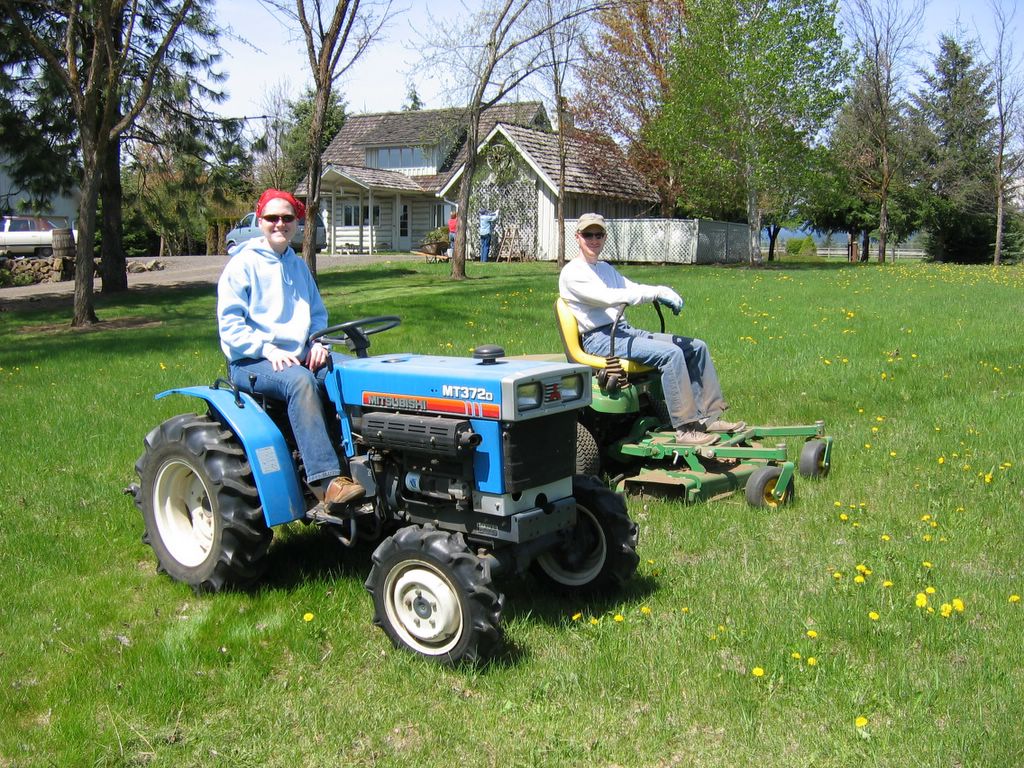
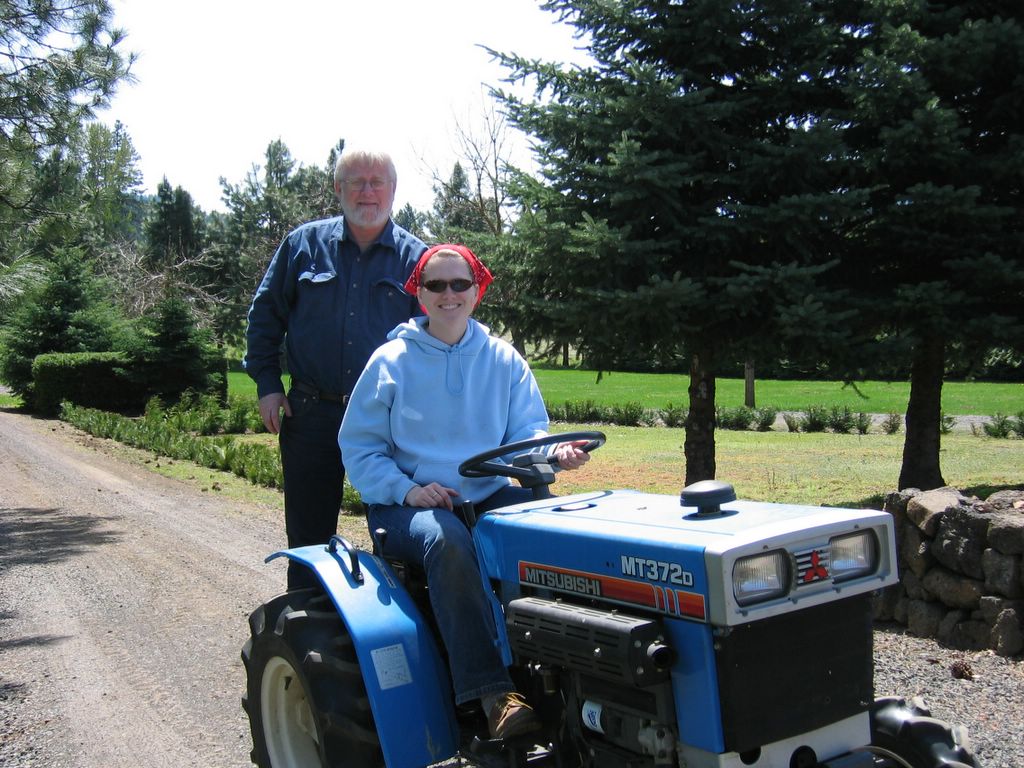
Farm machinery! We learned the equipment from Reidar, experienced farmer. Corinne drove the small tractor, while I mowed using our fancy mower. (With as much yard as we currently have, thank goodness for this machine!)


"Backseat" driver.


Corinne & Carol, planting clematis.


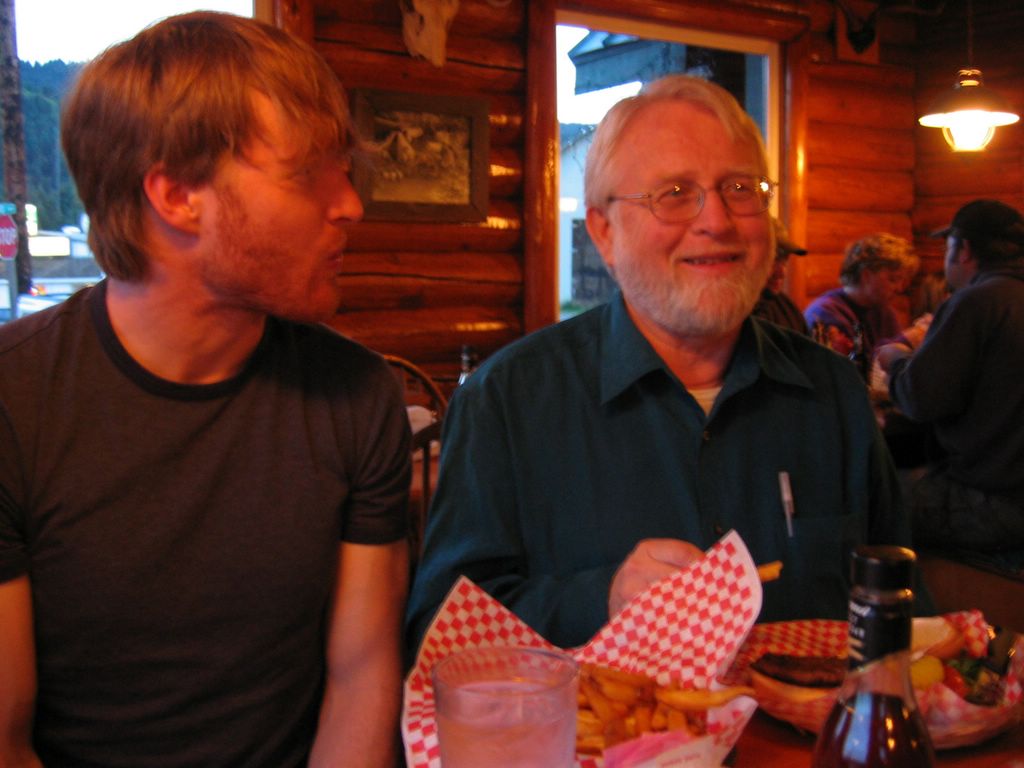
Loren and Reidar, at The Logs.

- Mike (& Corinne)
10 March 2006

Managing our Forests

We don't know the first thing about forests. So how are we supposed to come up with a "Forest Stewardship Plan" for our new property?

River Ford Farm was, at one time, intended to be a Christmas Tree Farm. In fact, you can still see our address listed online under "Trout Lake Tree Farm". So a good portion of our 57 acres is planted in various types of Christmas trees - Douglas Fir, Grand Fir, and Noble Fir. Unfortunately for the previous owners, by the time their trees were big enough to sell as such, they discovered that apparently other people had thought of the same idea. The market for Christmas trees in our area had flooded, and there just wasn't enough business to justify the expense. So they kept the trees, but switched their business model: now the goal was commercial harvest. To that end, they planted some additional trees on other sections of the property: Ponderosa Pine and Black Cherry (to experiment with growing a commercial hardwood in this area.)

The Washington State Department of Natural Resources (DNR) administers a program called the Forest Stewardship Plan. The goal of the program is to help qualified landowners "improve [their] forests for timber production, forest health, wildlife and fish habitat, special forest products, water quality, aesthetics, and fire safety." The state makes certain resources available, such as:

  • free consultation with (overworked) state foresters;
  • cost share payments (from an ever-dwindling pool of funds) to help defray costs of maintaining and improving your forest;
  • general resources, i.e. literature, classes, etc.; but most importantly
  • PROPERTY TAX BREAK. Lands which are qualified under this plan qualify for reduced property tax assessment.
But all of this assumes that you have an approved plan...

Since a plan must be submitted every 10 years or as property changes hands, we were required to file a new management plan by early April. The ramifications of NOT filing a plan and just letting the forest return to normal classification are non-trivial; we could potentially have to pay back- property taxes for as much as 7 years. But that was never our intention. We had planned from the start to continue the forest stewardship.

Thankfully, the Clausens (previous owners) had left us several large boxes of accumulated files containing information on anything you could imagine about the property, including all of the notes and the final stewardship plan that they submitted 10 years prior. So after some calls to the state forester and a few long evenings, we now have our management plan filed with the county.1

It's all there - soil quality, wildlife, fire management, topographic map and satellite imagery, plus our "guess" as to our 10 year management plans. The key goals that we identified:
  • "Naturalize" the forests. Currently most stands are a monoculture of only one species. Adding some diversity will encourage wildlife to move in, will help protect the forest from disease, and will generally give it a more natural feel.
  • Thinning. Right now, all of the stands are too crowded for optimal growth. So slowly over the next few years we plan to remove something on the order of every other tree to allow the ones that remain to be exposed to better air flow and more direct sunlight. We're considering buying a chipper so that the trees that are thinned can be converted into wood chip, which can then be used as mulch in the garden or around other plants, or simply scattered over the ground in the forests.

The likelihood that we'll follow the plan closely is pretty small, but at least now we have something down on paper that we (and the county) can refer to. Feel like taking a look? Well, here it is: Our Forest Management Plan (PDF)

1 In actuality, there is still a fairly significant point in our plan that the county wants us to clarify or change by the end of May. So we're not complete quite yet...

- Mike (& Corinne)
03 February 2006

It's Moving Day

So we put it off long enough - 2 weeks after we closed on the house, our moving day (actually, weekend) had arrived.
We had a good crew of Corinne's family come down from Seattle to help. And our realtor, Gorge Property, provides a free moving truck to all of her clients. Cool!

Of course, we had to give everyone the tour of the property. And with 57 acres, that 's quite a bit of property to see, especially in the snow.


We're so good to our parents...


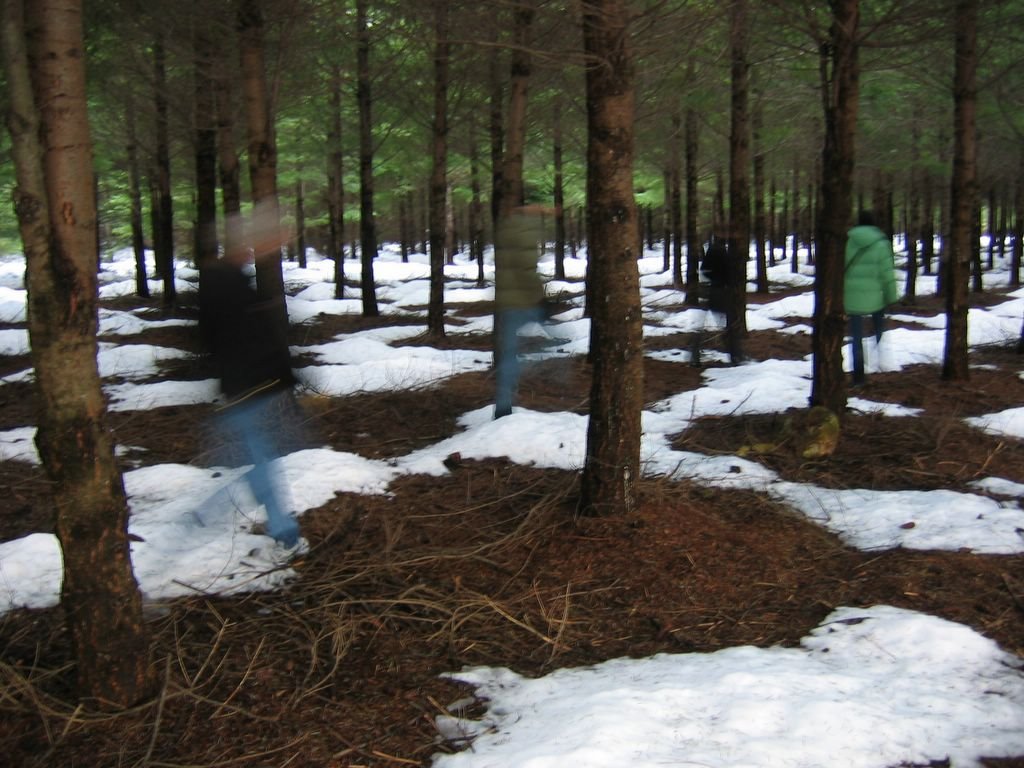
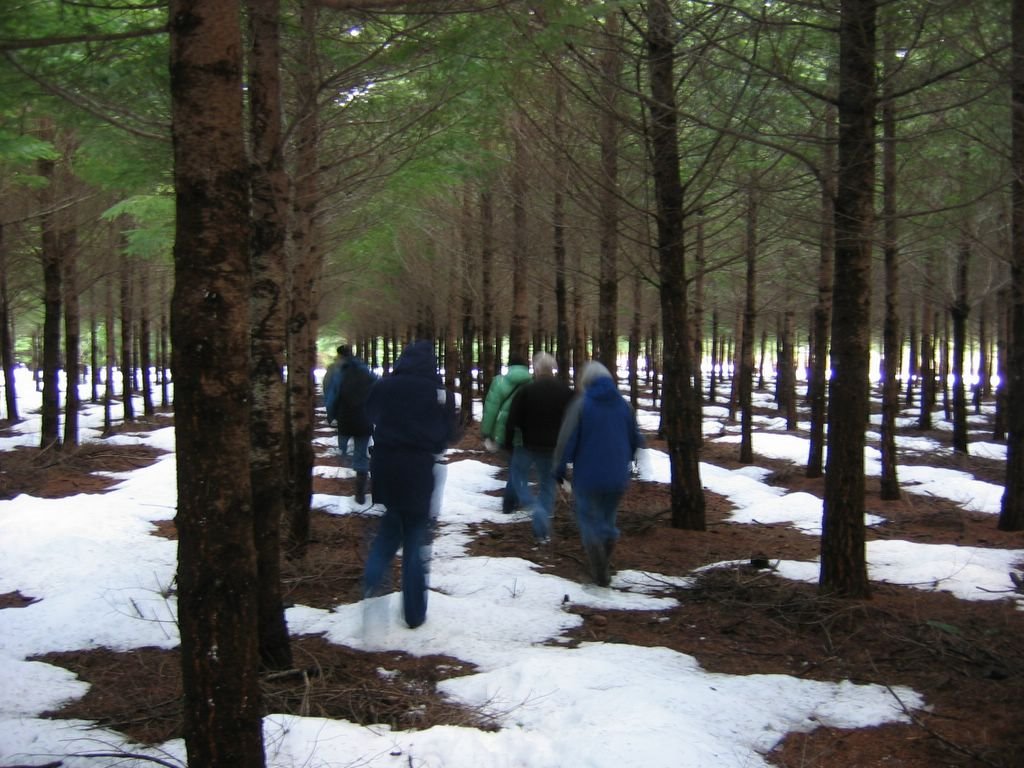
Ghosts in the forest. ~30 acres is planted in trees. Rows, and rows of trees. There are four primary species: Douglas Fir, Grand Fir, Noble Fir, and Ponderosa Pine. The Douglas Fir and Ponderosa Pine are valuable as timber, while the Grand and Noble Firs look pretty but don't get large enough to be very valuable commercially (primarily grown for Christmas trees).


Rows upon rows upon rows... one of our goals for the property is to "naturalize" some of the standa of trees, so it attracts more wildlife, while still retaining the commercial timber value. It will be some time before any of our trees will be ready for harvest; more on our "Forest Management Plan" in future postings.


The moving crew!


Mt Adams, straight out of our Great Room window! Believe it or not, it actually looks quite a bit BIGGER in real life.

There aren't any pictures of us actually "moving". But that wouldn't be very interesting to look at anyway.

- Mike (& Corinne)