15 May 2006

Spring Clausens Visit

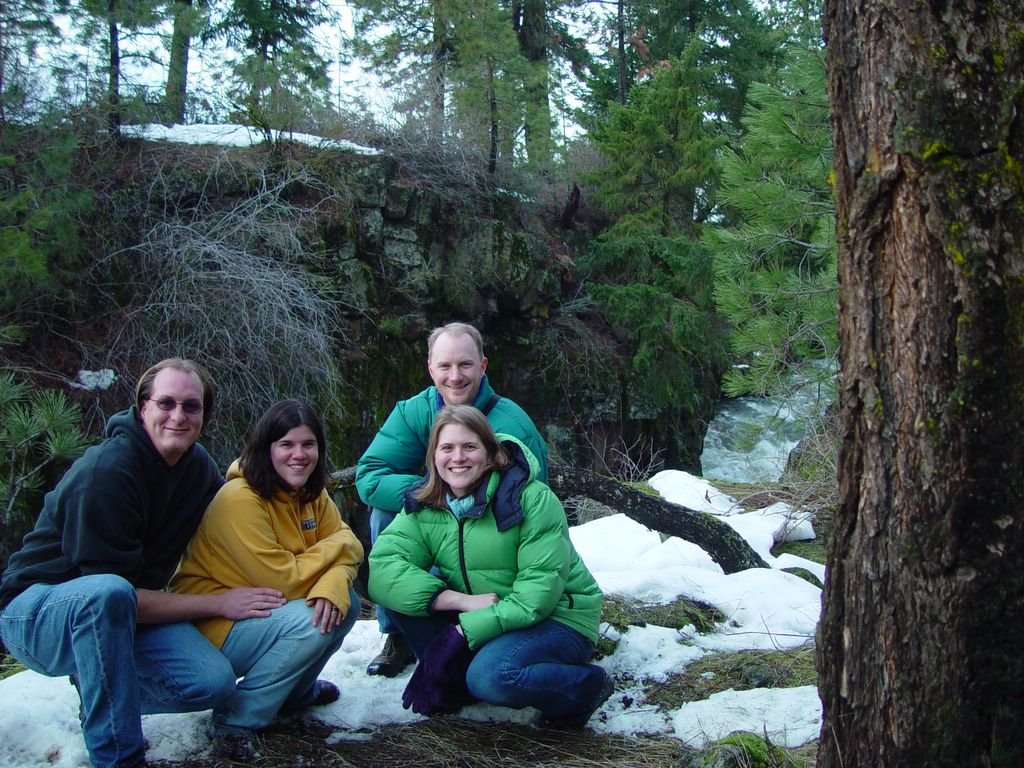
Going from renters to 60-acre property owners is quite a change! Thankfully, the Clausens, the former owners and original creators of "River Ford Farm", have been extremely helpful and willing to pass on their vast knowledge to us! They recently made a day trip to visit their old homestead and help us prepare for the new season.

Irrigation System

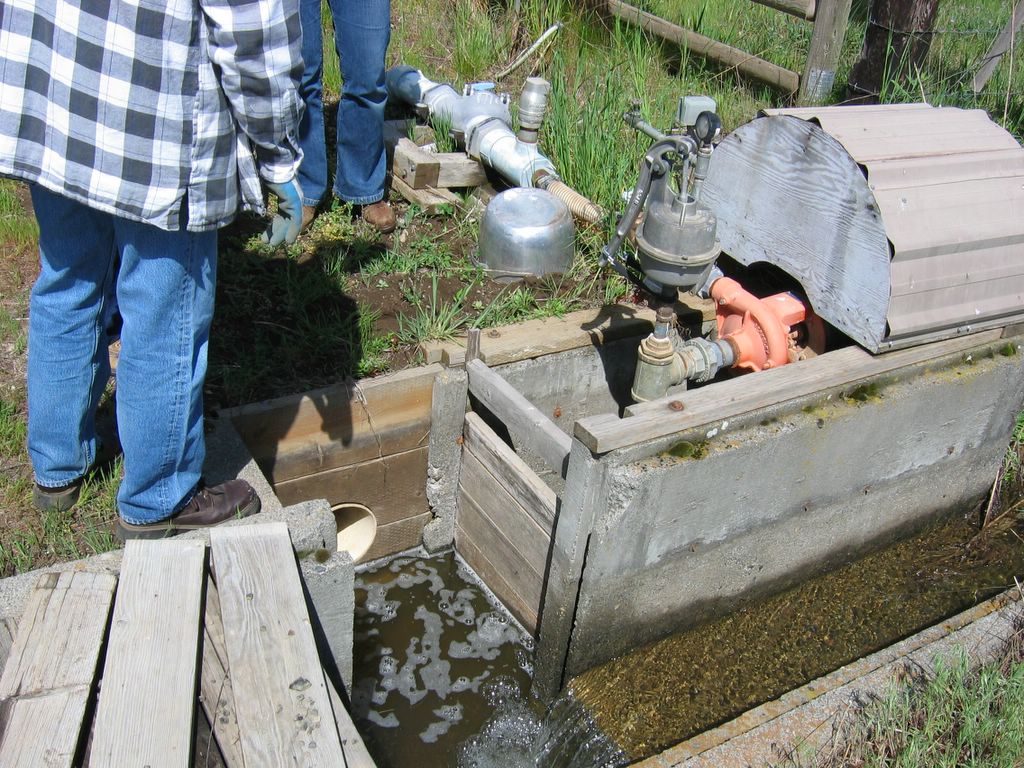
Learning the irrigation pump. The irrigation system is fairly extensive, and includes: a pump to extract water from the irrigation ditch and pressurize the system; underground PVC lines that run the complete length of the property; above-ground risers with connections for hand-lines; several sets of hand lines and wheel lines; and pop-up sprinklers on the lawn surrounding the house.

Trapping Gophers

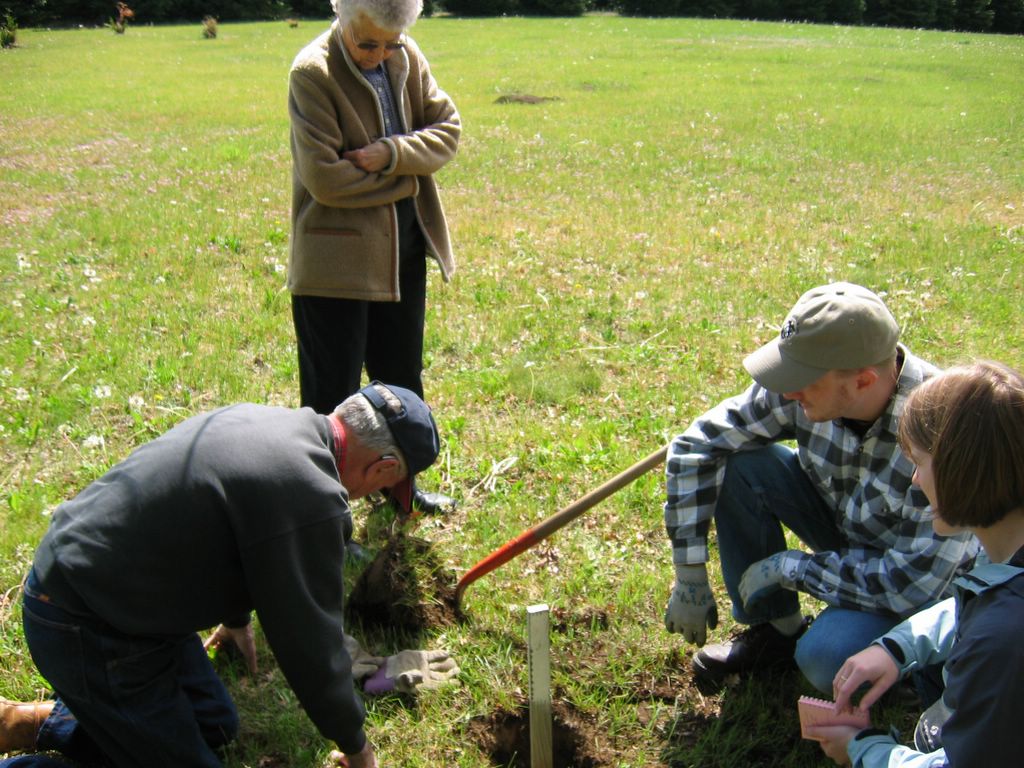
Setting a gopher trap. Our property is covered in dirt piles made by the pocket gophers. We're definitely learning from the masters here - one year they caught 100 gophers! We didn't catch any with our first two traps, but we're only just beginning.

Mending Fences

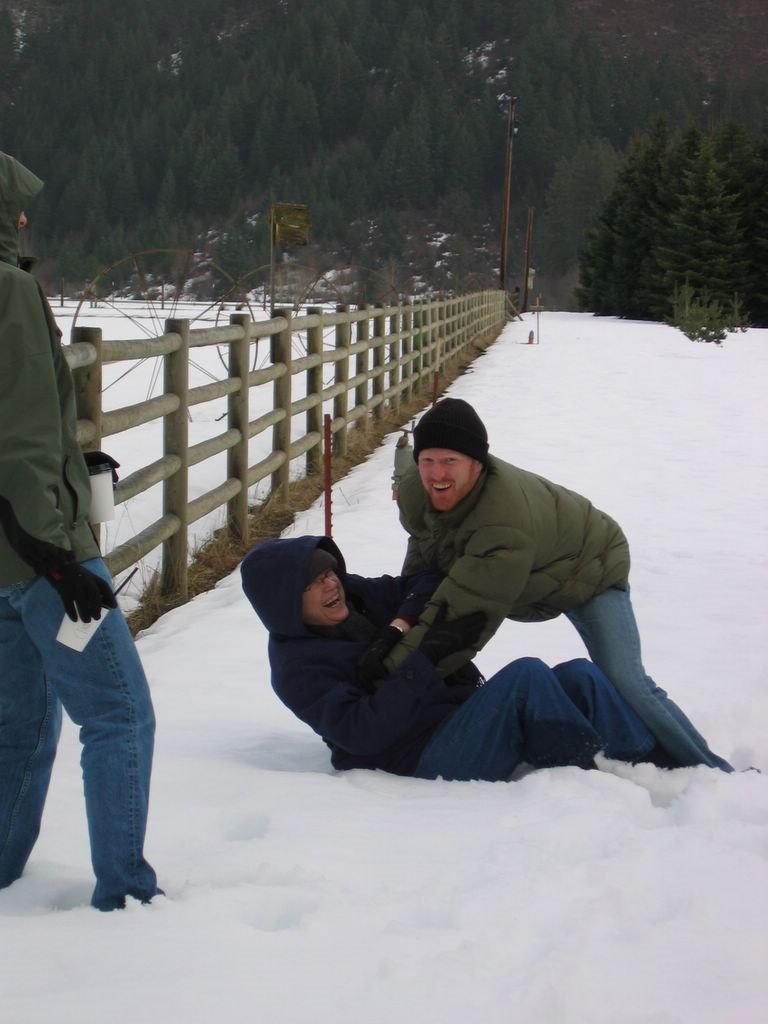
Yes, we're actually fixing a fence. Shortly before we moved in, an elk apparently misjudged the height of our rail fence and instead went straight through it. So one of the posts was broken at the base and needed to be replaced. So we had to first remove the stump of the existing post, which extended two feet below the ground and was secured at two levels by concrete. (This fence wasn't going anywhere!) So Vic helped us use the pneumatics on the small tractor to pull out the stump. Unfortunately, we have yet to find a suitable replacement post.

Walking the old Homestead

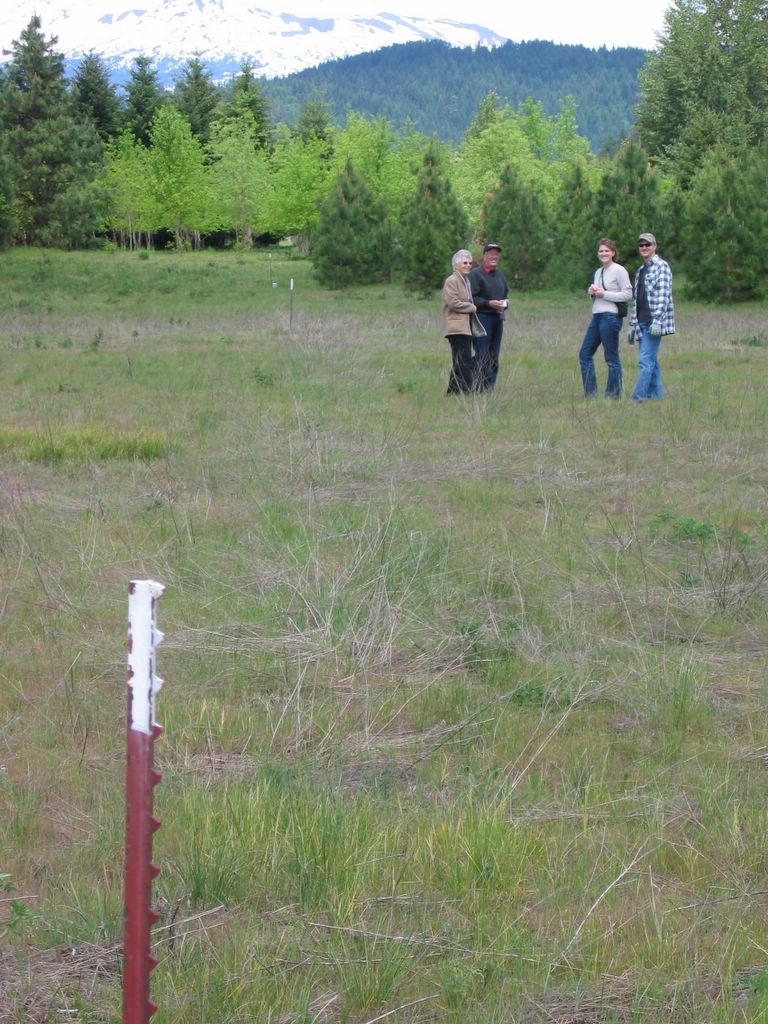
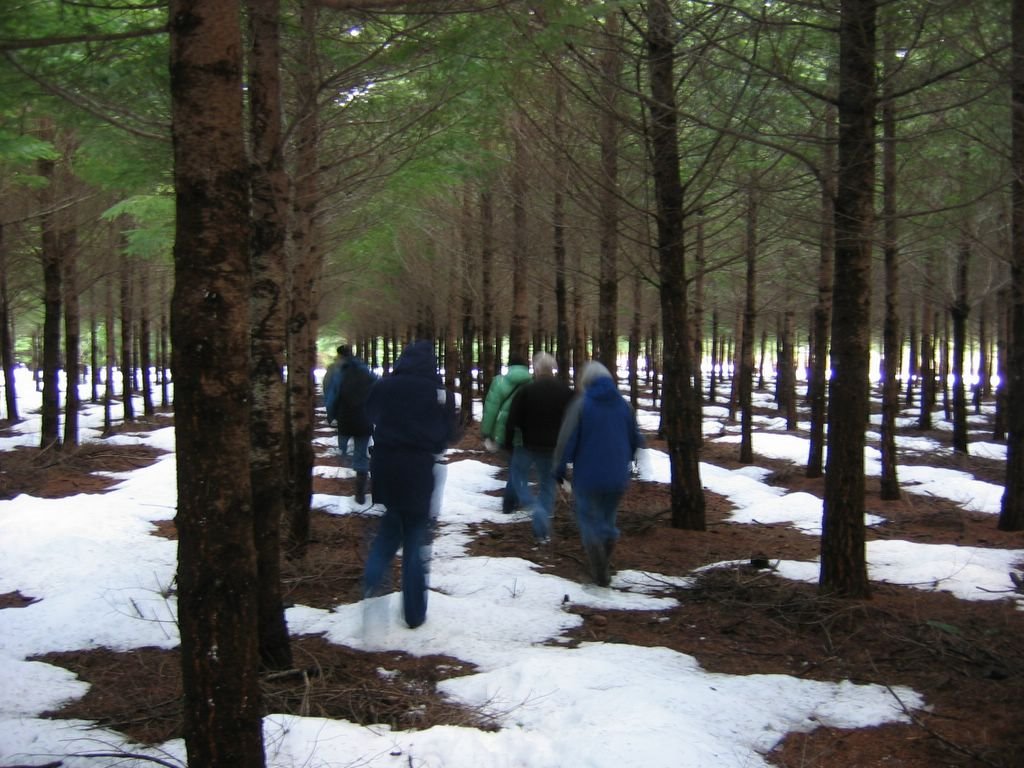
Of course, after all that work we had to make sure they got their fill of the old scenery.

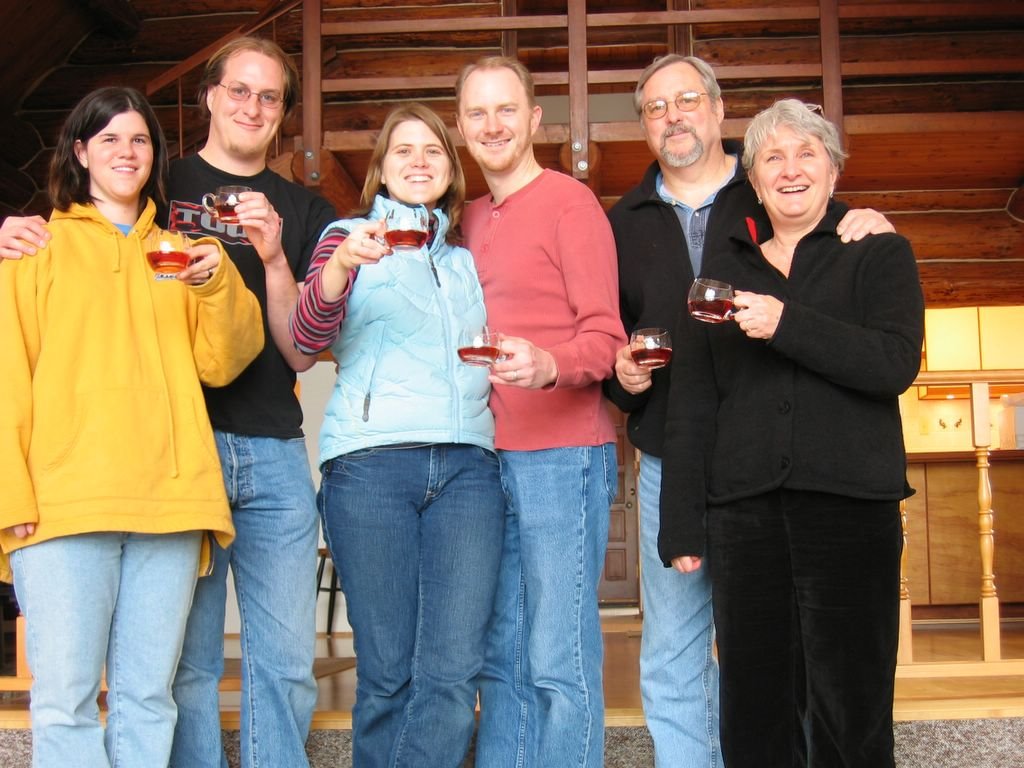
Thanks, Vic and Phyllis! We look forward to your next visit!

- Mike (& Corinne)

08 May 2006

We Saved a Bird!

I was watering flowers last night when a robin chirped loudly and made me jump. When I looked up he was sitting in the bush right next to me. I looked closer and saw that he was tangled up in the netting that the previous owners had put on the bush to keep the deer from eating it. :(

I grabbed Mike. We proceeded to have a 10 minute "discussion" about the proper approach before settling on a plan of Mike holding the bird while I did the surgery. Mike held the bird while it was still attached to the bush. Then I cut a big circle of netting out so that we could move the bird out of the bush. Since we were losing the light, we took him to the front porch where there was better light. We spent another 30 minutes carefully cutting away the netting. His feet and wings were tangled, and his head was through two sections of net. Mike had to loosen his grip in a small area just enough that I could work on each little section for a while.

The robin alternated between periods of freaking out and trying to bite us and resting calmly while we worked. The robin nipped me once and so I promptly withdrew my hand and smacked poor Mike in the face.

Anyway, we think we got ALL of the netting off the bird. When we let him go, he took off right out of Mike's hands and flew away. So I think he escaped unharmed.


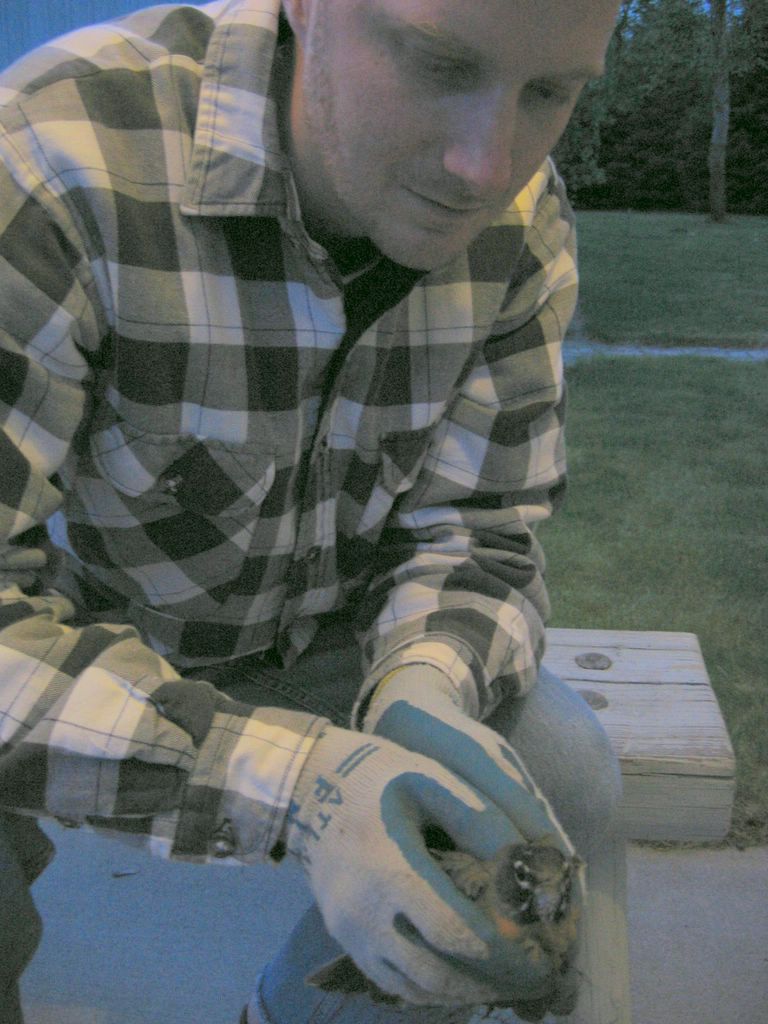
Mike holding the bird. You can see the netting.

I removed the netting from the bush this morning!

It certainly made for an interesting evening! We felt like heroes. :)

- Corinne (& Mike)

01 May 2006

The B&B & the County Hearing

About 2 weeks ago, we received a notice from the county that one of our neighbors had submitted a proposal to open a Bed & Breakfast, including "educational activities." According to county regulations, we were required to be notified since our property is within 300 ft of the property in question. The public hearing was scheduled for May 1st.

We like B&Bs, and will usually stay in a B&B when on vacation rather than even the fanciest of hotels. But what do we think about a B&B right across the street? And what about the "educational activities"?

The particular neighbor in question we had not yet met, so this notice came as a bit of a surprise (strike 1). The B&B would be located on our road, which is a dead-end road with a limited number of residents - and therefore limited auto traffic (strike 2). Furthermore, our property is directly between the B&B and the White Salmon River , increasing the likelihood of interlopers (strike 3?). After talking to a few neighbors whom we had met, we wrote a letter with a list of our specific concerns a decided to go to the hearing to present it in person.

The hearing was an interesting event, and we turned out to be the ONLY people to appear at the hearing other than the person who submitted the proposal. (There were two other letters sent to the planning committee on this issue.) I must admit it was a little awkward to meet the neighbor in question while at a meeting opposing her plans, but in the end everything worked out fine for all. Her proposal was approved, but with enough conditions to address all of our concerns. The most significant condition added was that the "conditional use permit" for her B&B is valid only for her; when the property is sold, the CUP expires. Since we are concerned about the commercialization of farmlands, this was a big issue for us. Once a B&B is established there, it is easier to expand and enlarge it in the future to the point where large-scale weddings and other social functions could end up across the street from us. That's not why we moved to the country! Now that the CUP does not go with the property if/when it is sold, the danger of that happening is greatly diminished.

Her goals for the B&B were to provide a small-scale educational and experiential atmosphere to teach farming and ranching. We wish her the best of luck with her plans!

- Mike (& Corinne)

29 April 2006

Corinne's birthday weekend

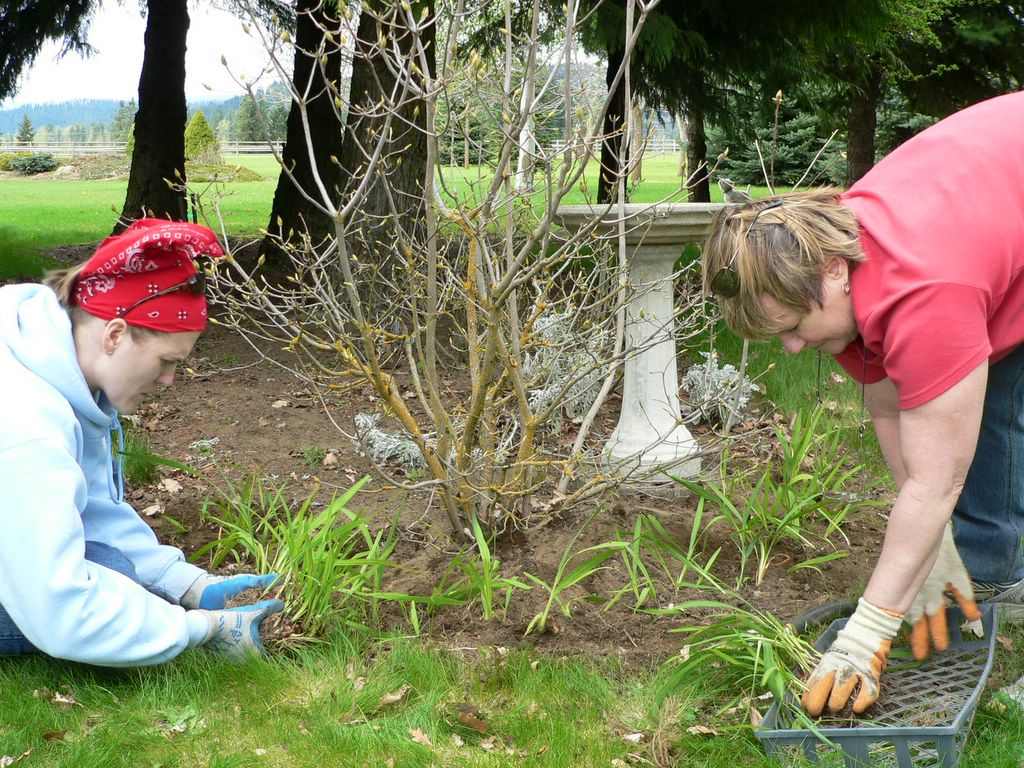
For Corinne's birthday, a contingency of her family came to visit to help us prepare for spring. They brought with them all sorts of flowers to plant around the yard, plus all those extra hands to help us weed and prune!


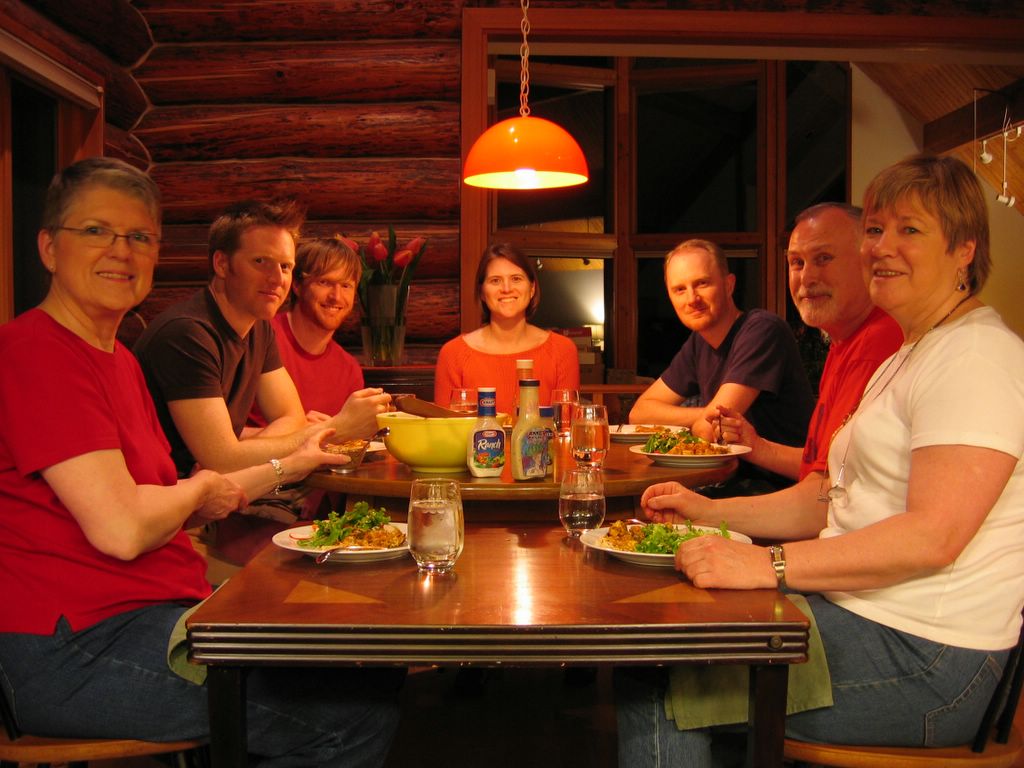
Dinner @Chez Mike & Corinne


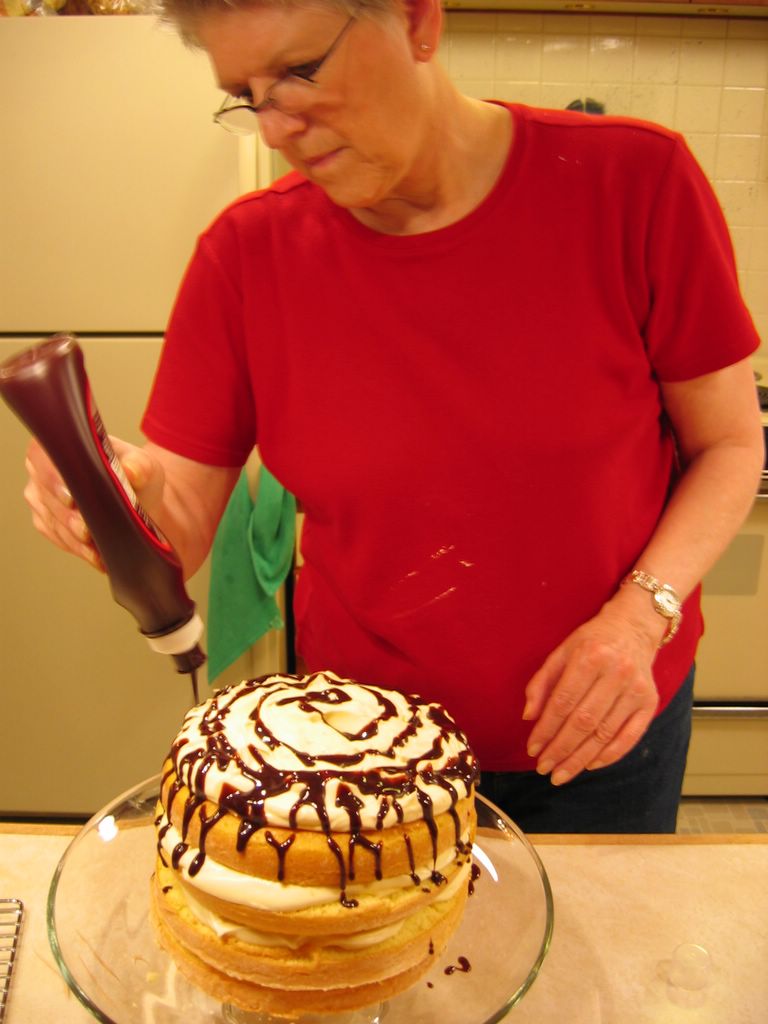
Donna's famous Boston Creme Pie! You have to make it the day before and let it sit in the fridge overnight.


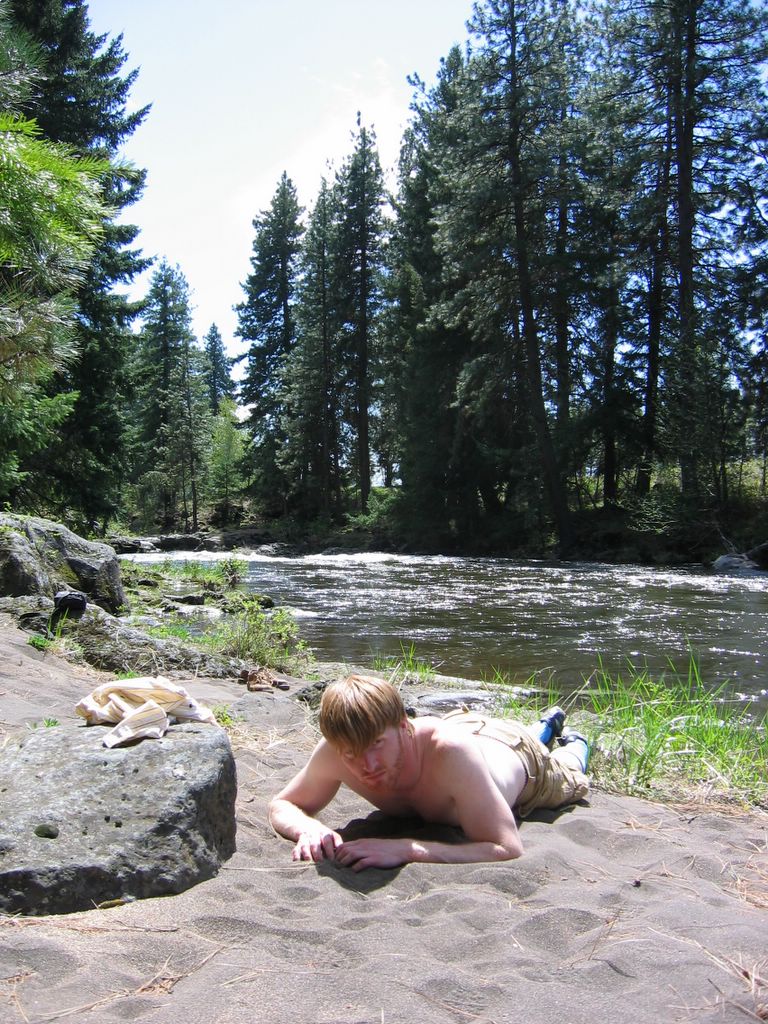
During a walk along the river, Corinne decided to "cool off". Boy, you can really tell that the river is glacier fed.


Loren, relaxing on the "beach".


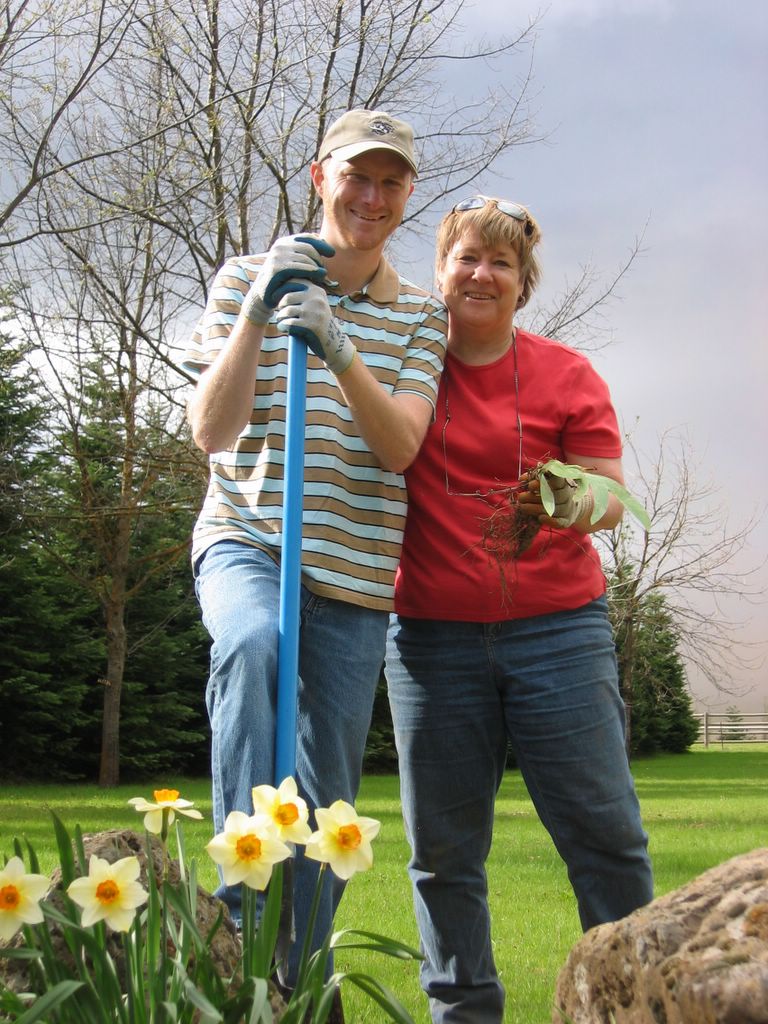
Planting the peonies in the burm.


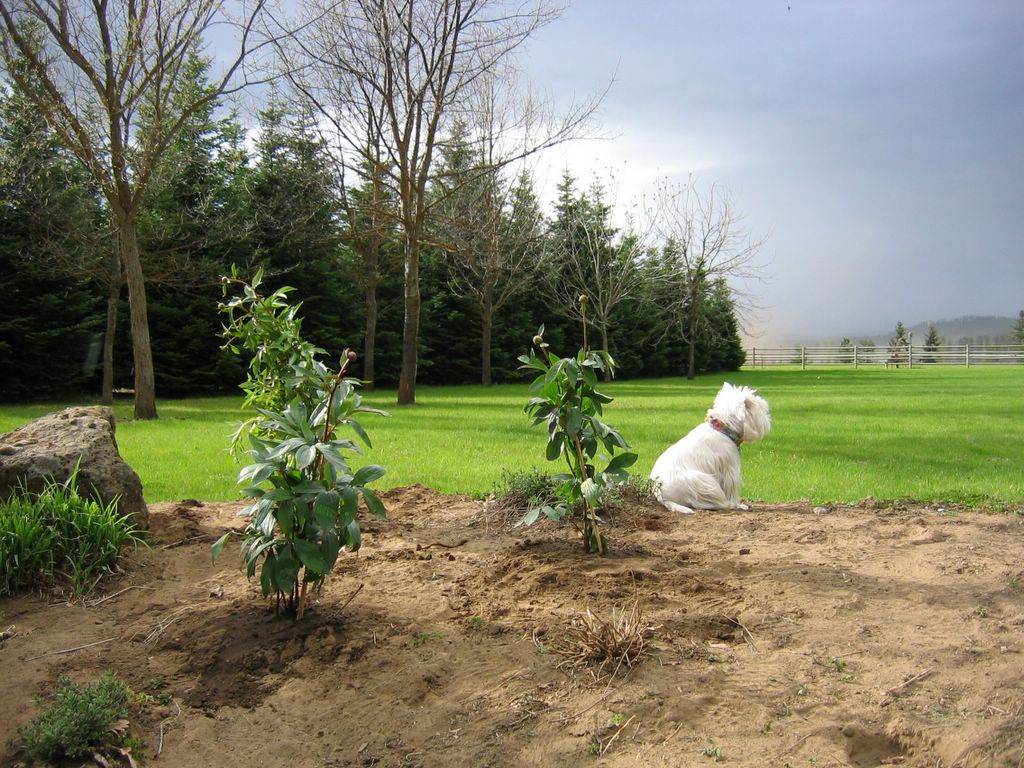
Chloe guarding the newly planted flowers. In the background you can see a small dust storm, since it hasn't rained in several weeks.


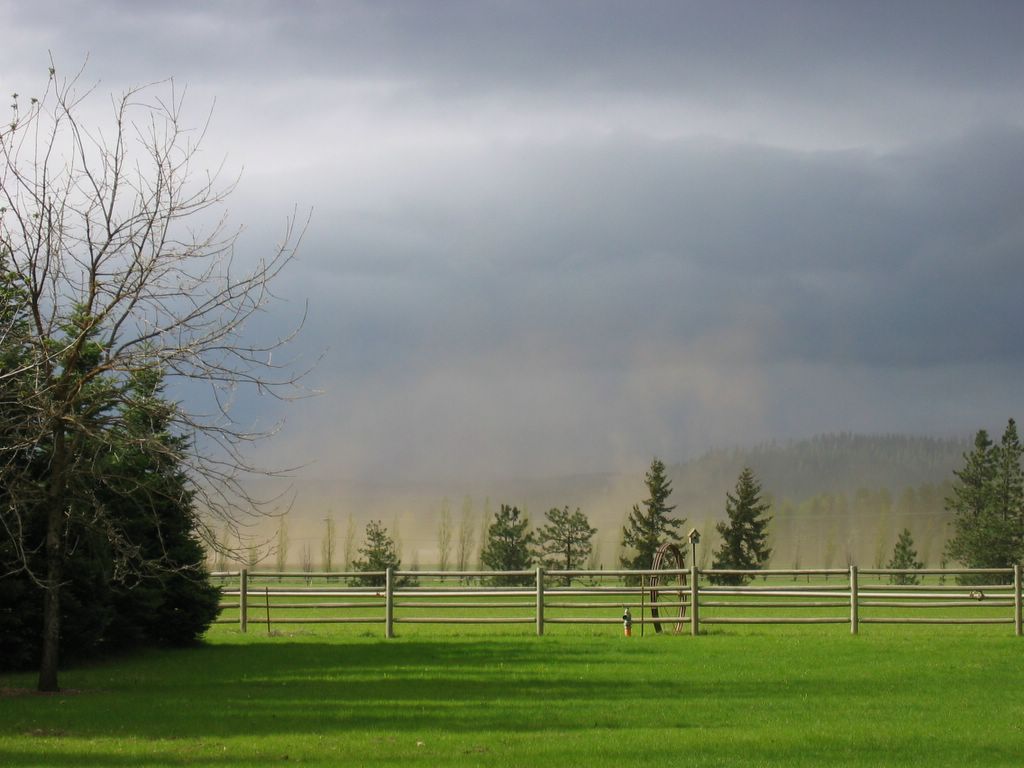
Dust storm on the field to the north. We eventually had to move inside until the worst of it passed.


Donna & Carol, pruning the vine roses.


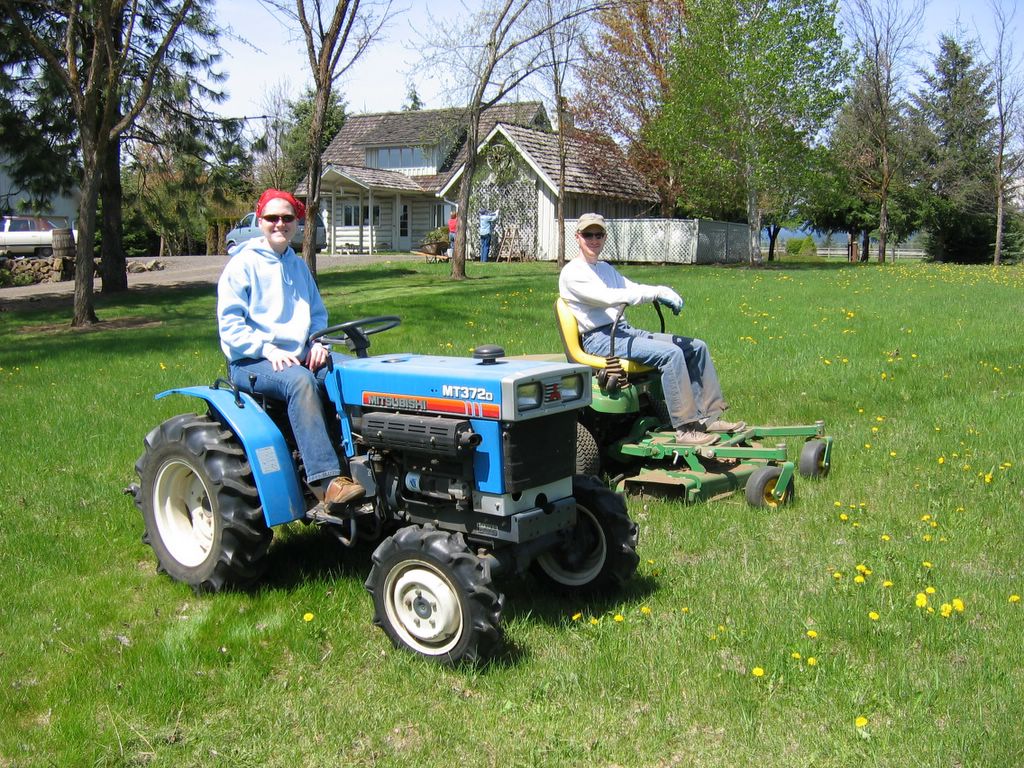
Farm machinery! We learned the equipment from Reidar, experienced farmer. Corinne drove the small tractor, while I mowed using our fancy mower. (With as much yard as we currently have, thank goodness for this machine!)


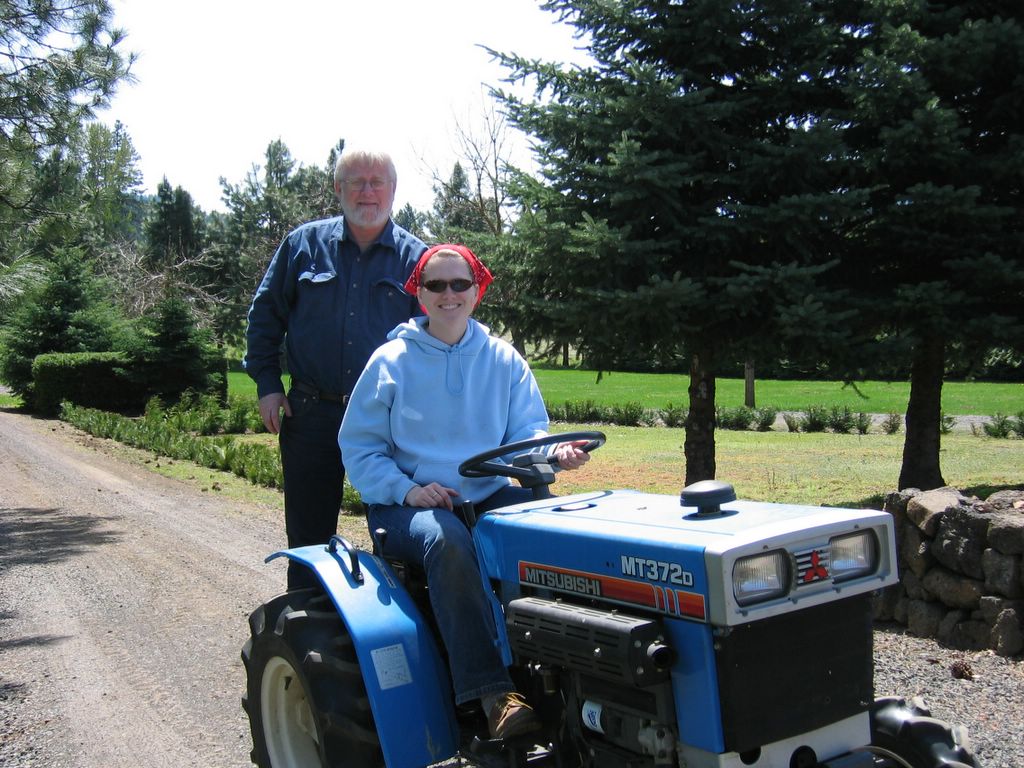
"Backseat" driver.


Corinne & Carol, planting clematis.


Loren and Reidar, at The Logs.

- Mike (& Corinne)

10 March 2006

Managing our Forests

We don't know the first thing about forests. So how are we supposed to come up with a "Forest Stewardship Plan" for our new property?

River Ford Farm was, at one time, intended to be a Christmas Tree Farm. In fact, you can still see our address listed online under "Trout Lake Tree Farm". So a good portion of our 57 acres is planted in various types of Christmas trees - Douglas Fir, Grand Fir, and Noble Fir. Unfortunately for the previous owners, by the time their trees were big enough to sell as such, they discovered that apparently other people had thought of the same idea. The market for Christmas trees in our area had flooded, and there just wasn't enough business to justify the expense. So they kept the trees, but switched their business model: now the goal was commercial harvest. To that end, they planted some additional trees on other sections of the property: Ponderosa Pine and Black Cherry (to experiment with growing a commercial hardwood in this area.)

The Washington State Department of Natural Resources (DNR) administers a program called the Forest Stewardship Plan. The goal of the program is to help qualified landowners "improve [their] forests for timber production, forest health, wildlife and fish habitat, special forest products, water quality, aesthetics, and fire safety." The state makes certain resources available, such as:

  • free consultation with (overworked) state foresters;
  • cost share payments (from an ever-dwindling pool of funds) to help defray costs of maintaining and improving your forest;
  • general resources, i.e. literature, classes, etc.; but most importantly
  • PROPERTY TAX BREAK. Lands which are qualified under this plan qualify for reduced property tax assessment.
But all of this assumes that you have an approved plan...

Since a plan must be submitted every 10 years or as property changes hands, we were required to file a new management plan by early April. The ramifications of NOT filing a plan and just letting the forest return to normal classification are non-trivial; we could potentially have to pay back- property taxes for as much as 7 years. But that was never our intention. We had planned from the start to continue the forest stewardship.

Thankfully, the Clausens (previous owners) had left us several large boxes of accumulated files containing information on anything you could imagine about the property, including all of the notes and the final stewardship plan that they submitted 10 years prior. So after some calls to the state forester and a few long evenings, we now have our management plan filed with the county.1

It's all there - soil quality, wildlife, fire management, topographic map and satellite imagery, plus our "guess" as to our 10 year management plans. The key goals that we identified:
  • "Naturalize" the forests. Currently most stands are a monoculture of only one species. Adding some diversity will encourage wildlife to move in, will help protect the forest from disease, and will generally give it a more natural feel.
  • Thinning. Right now, all of the stands are too crowded for optimal growth. So slowly over the next few years we plan to remove something on the order of every other tree to allow the ones that remain to be exposed to better air flow and more direct sunlight. We're considering buying a chipper so that the trees that are thinned can be converted into wood chip, which can then be used as mulch in the garden or around other plants, or simply scattered over the ground in the forests.

The likelihood that we'll follow the plan closely is pretty small, but at least now we have something down on paper that we (and the county) can refer to. Feel like taking a look? Well, here it is: Our Forest Management Plan (PDF)

1 In actuality, there is still a fairly significant point in our plan that the county wants us to clarify or change by the end of May. So we're not complete quite yet...

- Mike (& Corinne)

03 February 2006

It's Moving Day

So we put it off long enough - 2 weeks after we closed on the house, our moving day (actually, weekend) had arrived.

We had a good crew of Corinne's family come down from Seattle to help. And our realtor, Gorge Property, provides a free moving truck to all of her clients. Cool!

Of course, we had to give everyone the tour of the property. And with 57 acres, that 's quite a bit of property to see, especially in the snow.


We're so good to our parents...


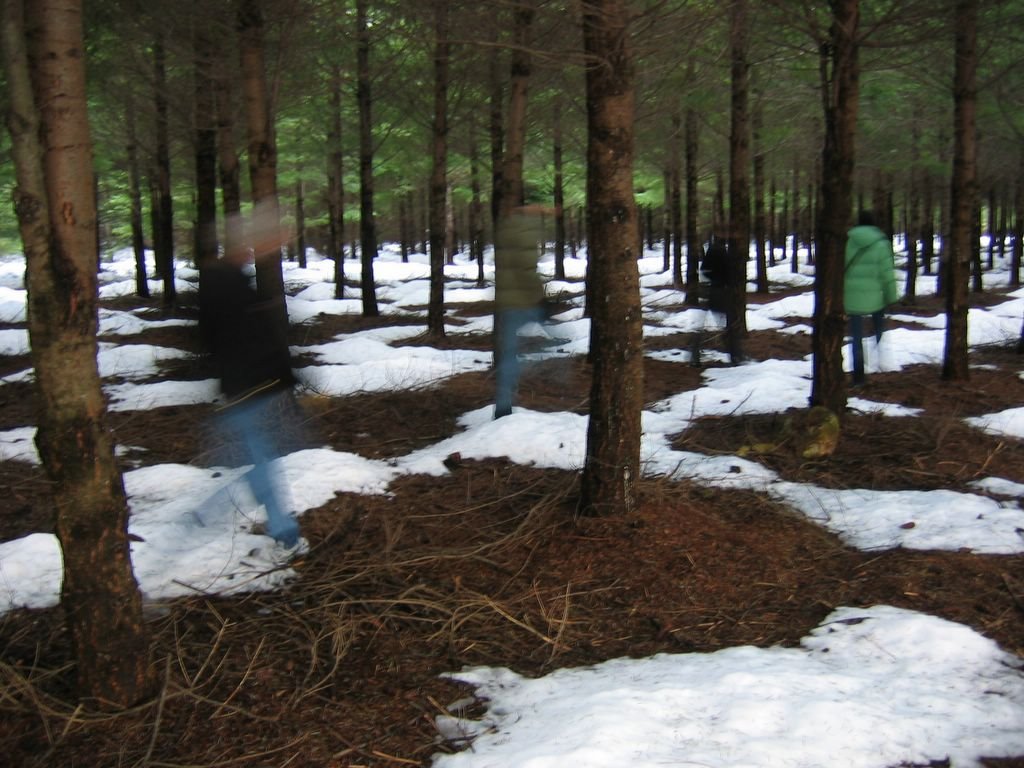
Ghosts in the forest. ~30 acres is planted in trees. Rows, and rows of trees. There are four primary species: Douglas Fir, Grand Fir, Noble Fir, and Ponderosa Pine. The Douglas Fir and Ponderosa Pine are valuable as timber, while the Grand and Noble Firs look pretty but don't get large enough to be very valuable commercially (primarily grown for Christmas trees).


Rows upon rows upon rows... one of our goals for the property is to "naturalize" some of the standa of trees, so it attracts more wildlife, while still retaining the commercial timber value. It will be some time before any of our trees will be ready for harvest; more on our "Forest Management Plan" in future postings.


The moving crew!


Mt Adams, straight out of our Great Room window! Believe it or not, it actually looks quite a bit BIGGER in real life.

There aren't any pictures of us actually "moving". But that wouldn't be very interesting to look at anyway.

- Mike (& Corinne)
21 January 2006

Snowboarding!

This area is a boon for the outdoor-types - tons of opportunities for all sorts of activities, which the emphasis on "active". One of those activities is snowboarding. With an elevation of 11,249ft, Mt. Hood has 3 ski facilities, including the only year-round skiing and snowboarding in the US, and it's less than an hour away1. So we decided that we would take up snowboarding. (While Mt. Adams is only 15 miles away, it does not have any facilities; much of the mountain, including the summit, is inside the Yakama Nation Indian reservation.)

It's awesome! The best thing about snowboarding is that when you are first learning, you can have fun on the very first day. But I definitely suggest that anyone learning to snowboard take lessons. We bought a 3-pack of beginner lift tickets (restricted to the beginner lifts) which included rentals and a 90-minute lesson each time. There's no arguing that snowboarding feels really awkward when you are first learning; but once you start to get the hang of it, you're ready to head downhill (slowly).

The key to snowboarding, at least for us, is having the right equipment. So we went out and bought pants, jackets, gloves, wrist guards, helmets, and a buttshield even before we went up to the mountain for the first time.

I know what you're thinking - did he just say "buttshield"?

Yes, buttshield. We each received one of these devices from Corinne's brother Loren, who swears by them. When you are learning to snowboard, you are going to fall. A lot. And even after you learn, you are still going to fall, just not as much (hopefully). With this buttshield shoved down your pants, falling on your ass isn't so bad. And it even keeps you warm when sitting in the snow - not too shabby. The helmut and wrist guards are probably more important - spraining or breaking your wrist while attempting to break your fall is one of the more common injuries on the mountain - but neither garners quite the response of the buttshield.


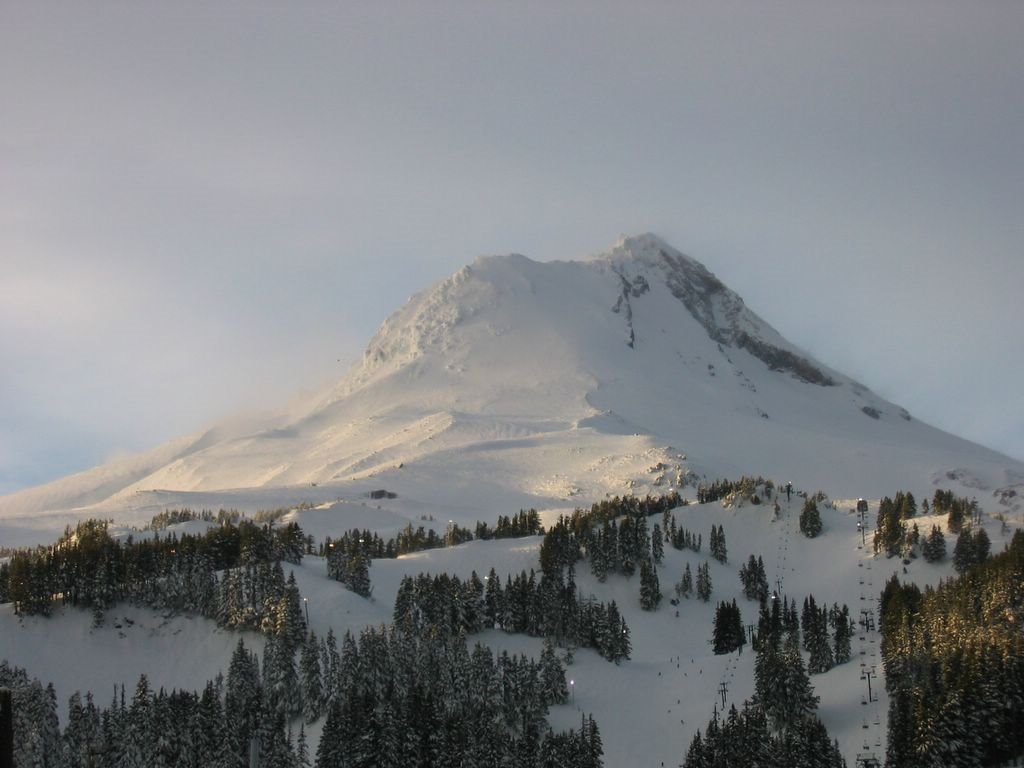
Mt. Hood from the Mt Hood Meadows parking lot. You won't see any photos of us actually ON the mountain just yet; when you do, you'll know we have gotten sufficiently good to be able to carry a camera down the hill without danger of landing on it.

- Mike (& Corinne)
1Technically, the facilities on Mt. Hood are about 40 minutes from the Columbia River, and our house is 30 minutes from the Columbia. But it's still pretty close.

20 January 2006

Dalys visit the New House

Rather than traveling East for the holidays this year, we coordinated it so that my family would come visit us in January. And it just so happened that they arrived on the day of our closing! (We had done all of the signing the day before our closing, so that we wouldn't have to worry about.)


A toast to the new house! We didn't do any "large scale" moving into the new house while they were here, but we did make sure both cars were full before heading north.

On the Friday after our closing, we decided to host Bad Movie night at our new house, despite the fact that we hadn't actually moved in yet. (We did have some furniture that we bought - cheap - from the previous owners, so that there was something to sit on.) So we borrowed a projector from the office, connected it up to Corinne's laptop, and initiated the house with a showing of Killer Klowns from Outer Space. I can't think of a better way (although I'm sure Corinne can.)


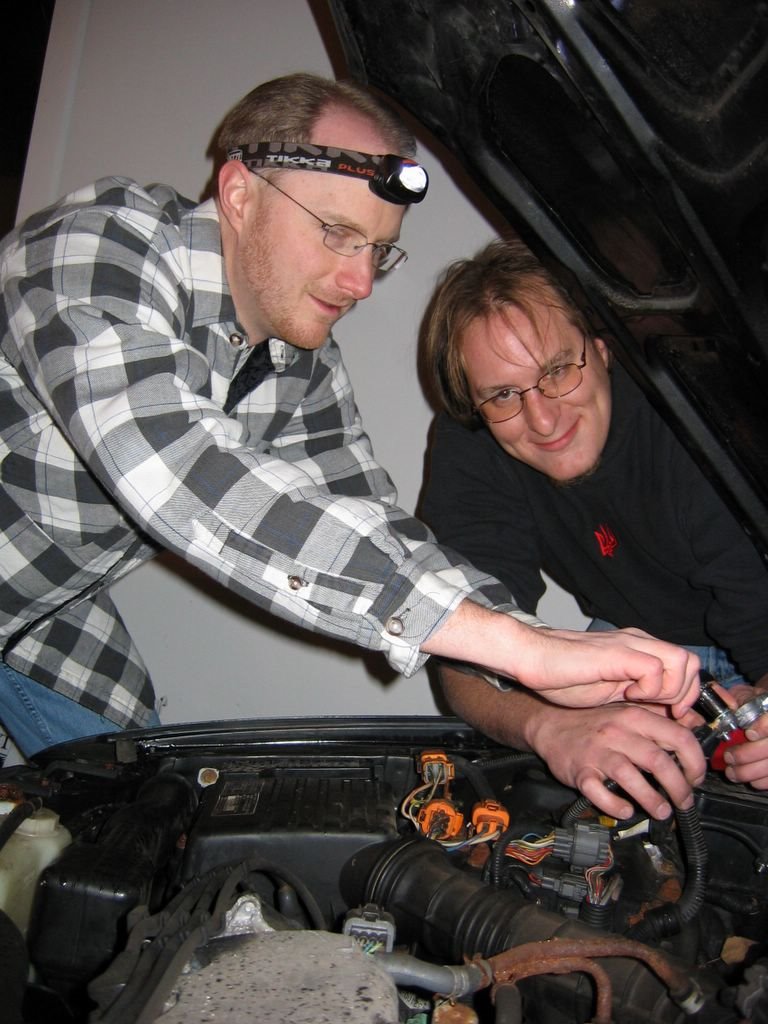
While Drew was here, he helped me replace the battery and battery terminals. Thanks, Drew! It was good practice for me, since I don't have that much experience with machinery - and we now own a machine shop full of tractors and other implements of destruction.


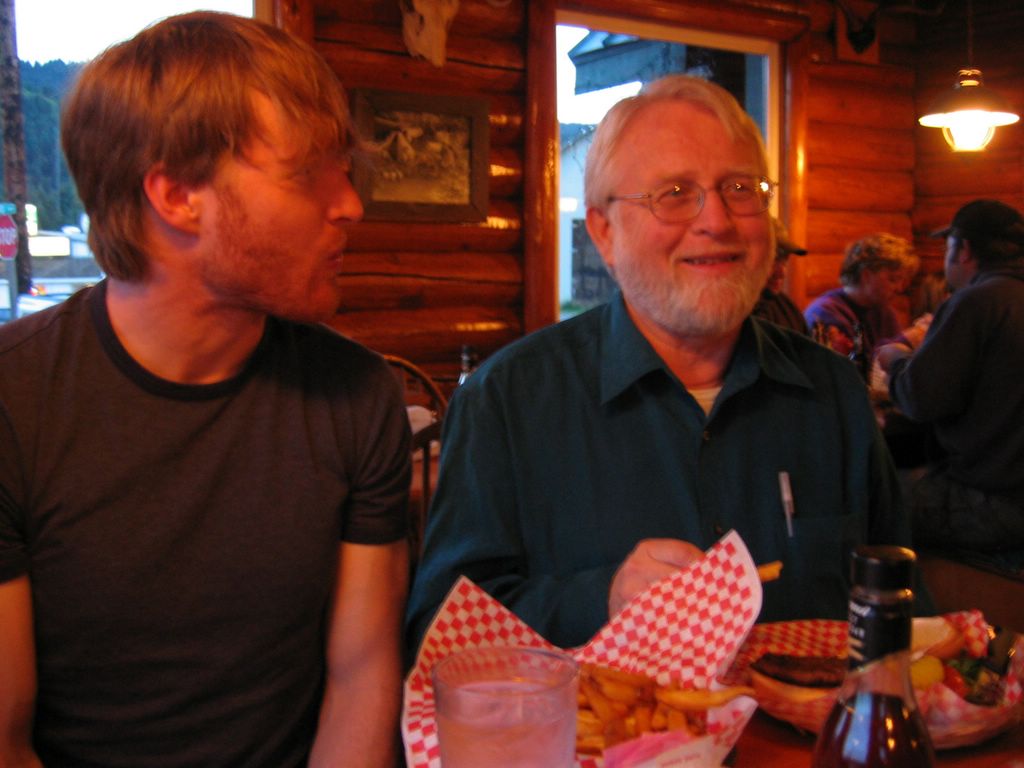
During his last visit, not only did Drew & Michelle encounter the worst winter on Mt Hood in recent history, but Drew was also denied the one food he craved while he was here: Dungeness Crab. So this time, he made sure that he got his fill. They also got to experience, according to Drew, "the greatest snowboarding in my life". I guess we made up for last year. :)


A walk along the White Salmon River, exploring our own personal park.


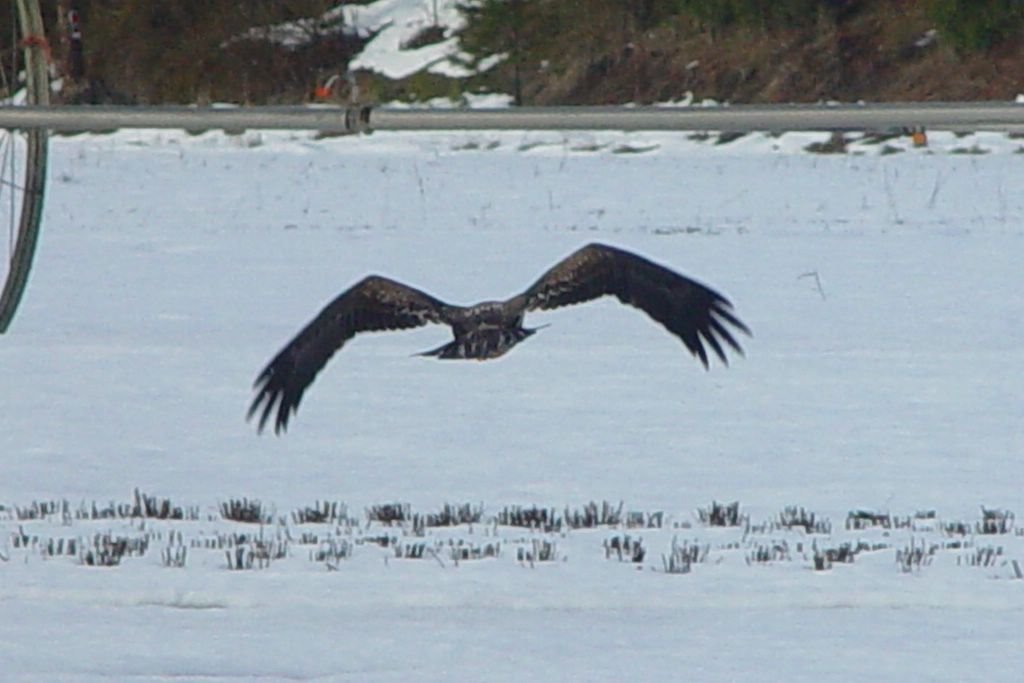
We snapped this photo of a hawk (?) on a nearby field.

- Mike (& Corinne)
13 January 2006

The New House!

Well, we finally did it. As of January 13th, 2006, we are now the proud owners of a 2000-sqft log house with a 60-acre estate located in beautiful Trout Lake, WA!

The quick summary:

  • The log house was built in 1977 by the previous owners, The Clausens.
  • The majority of the house is on the main floor, with only the master bedroom and bath occupying the second floor. There is one guest room.
  • A Lindal Cedar "Great Room" addition was added in 1991
  • The second floor of the 2-car garage is currently unfinished. Other outbuildings include a garden shed and large machine shop containing all of our newly-purchased farm equipment. You'll probably hear more about the equipment once we figure out how to use it (or even what to do with it!)
  • Approximately 30 acres of the property is planted in coniferous trees. Originally, it was intended to become a Christmas tree farm, but the market didn't cooperate. So now it is rows of 20-year-old conifers that are managed under a state Forest Stewardship Program. (More on that in future postings)
The property even comes with a name: "River Ford Farm", named after a particularly low-bank section of the White Salmon River on the west side of the property. According to local folklore, the Yakama Indians used to cross the river at that section to gather huckleberries on the other side.

Since we plan to be here for quite some time, the photos below will only scratch the surface.


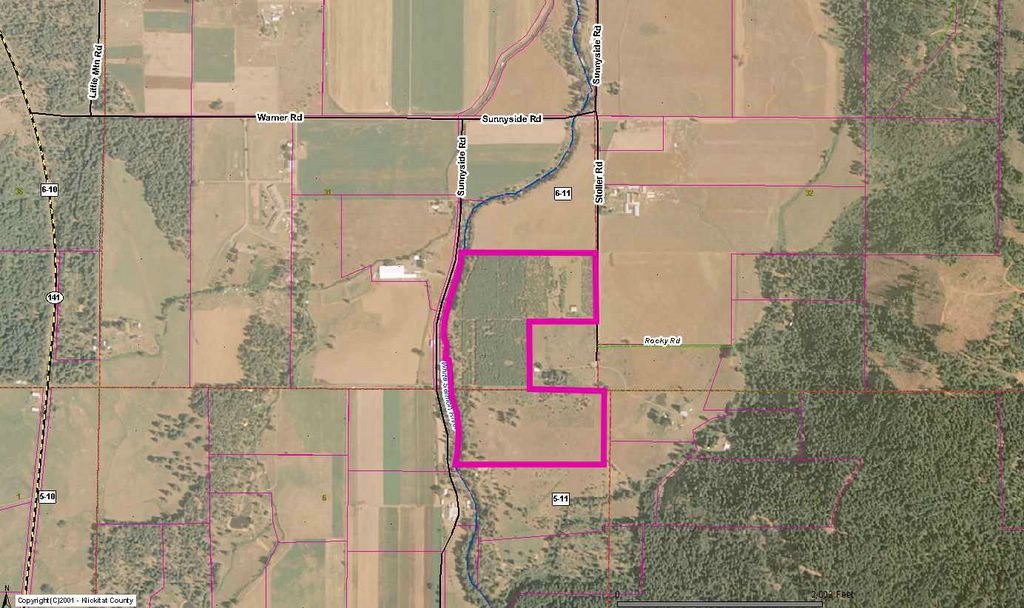
Just to give some perspective... the pink outline is our new property! Just under 60 acres total. This aerial photo is from 2003, so it is fairly recent. As you can see, lots of farmland around us. Trout Lake is an unincorporated section of Klickitat County with approximately 800 residents.


On the threshold of our new house!


One of the happy home-owners exploring the new lands.


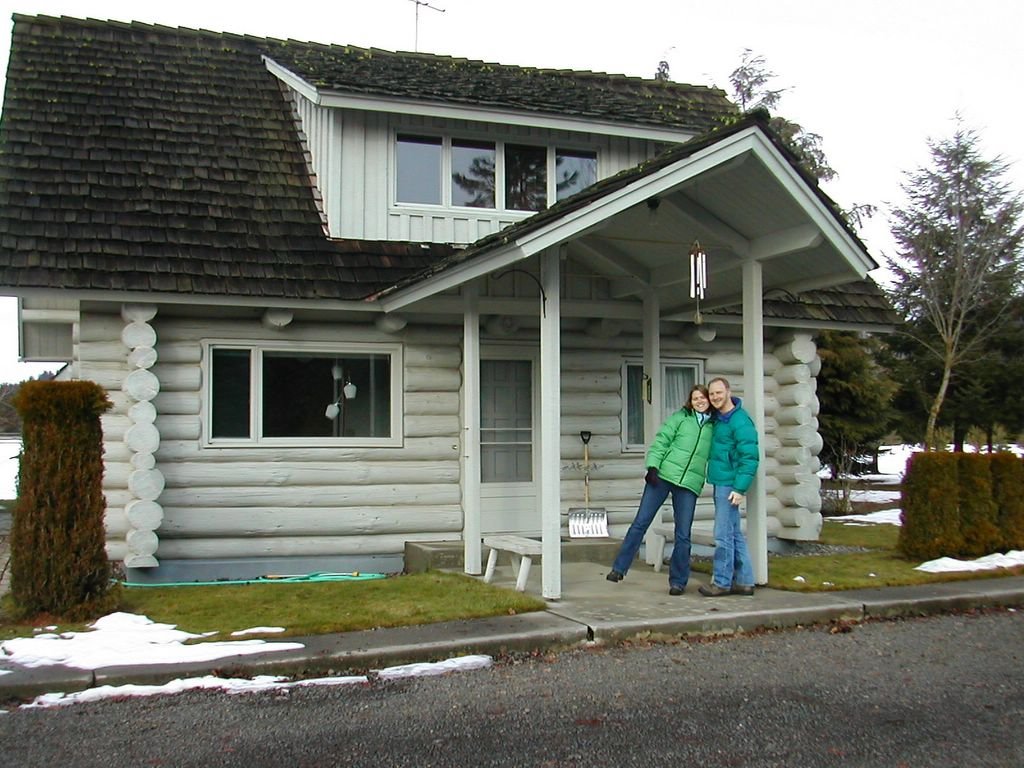
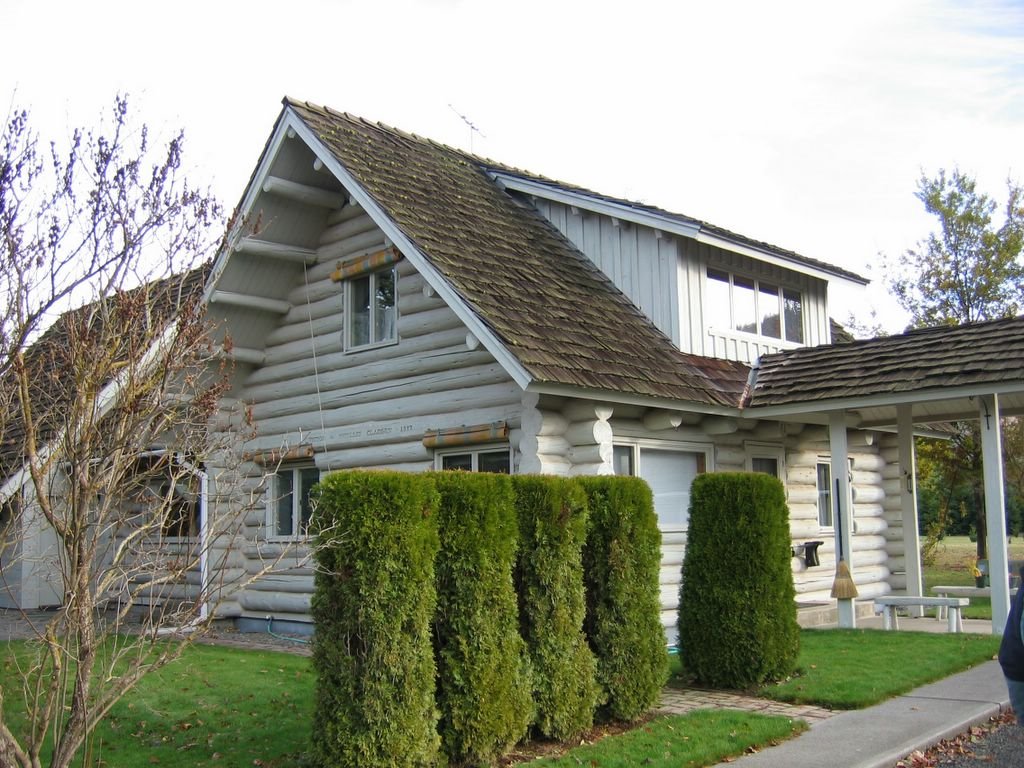
Our 1977 log house! In the back you can partially see the Great Room addition that was added later.


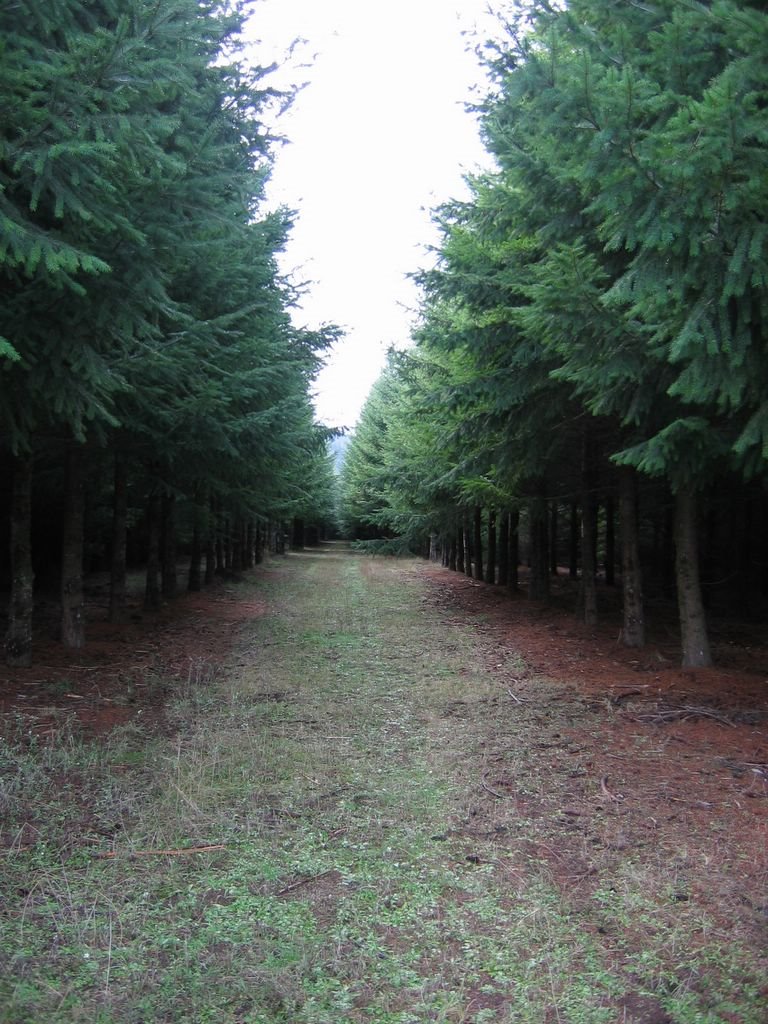
A view down the fire lane through one stand of trees.


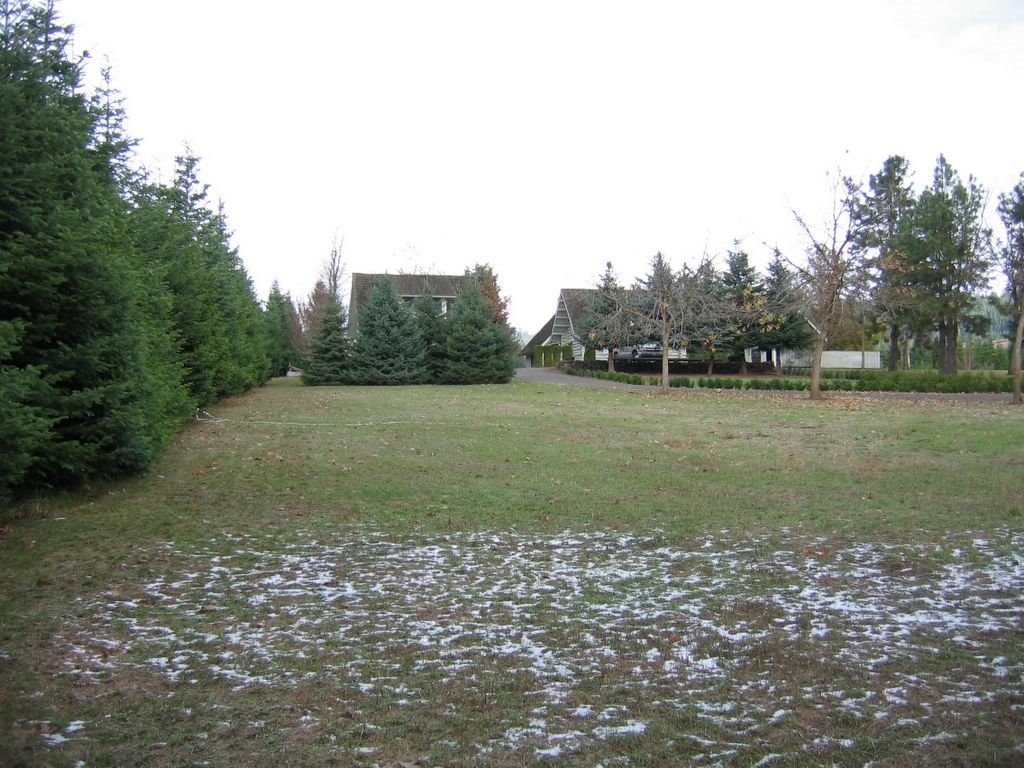
"The front yard". The house is visible just to the right of center behind some trees; the garage is to the left of center, also behind trees. The circular driveway runs between them.


"The front yard, pt 2" Here you can see the house again, the circular driveway, and the great garden patch in the middle surrounded by cedar seedlings.


Here's a view of the "back" of the house, consisting primarily of the Great Room addition.


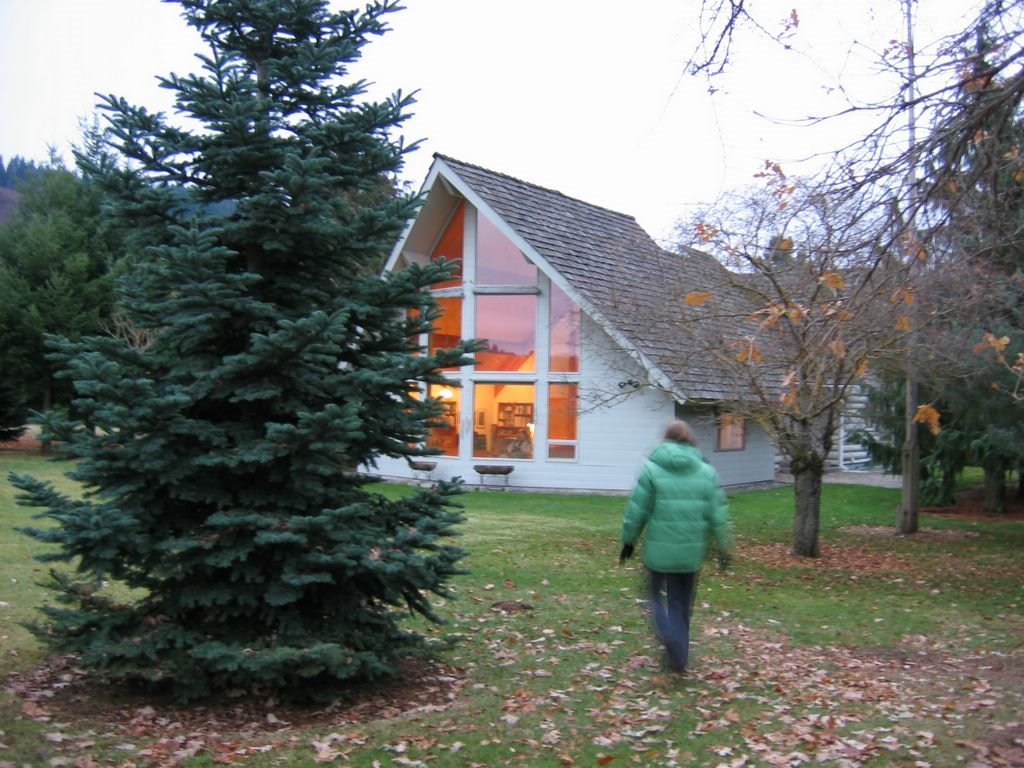
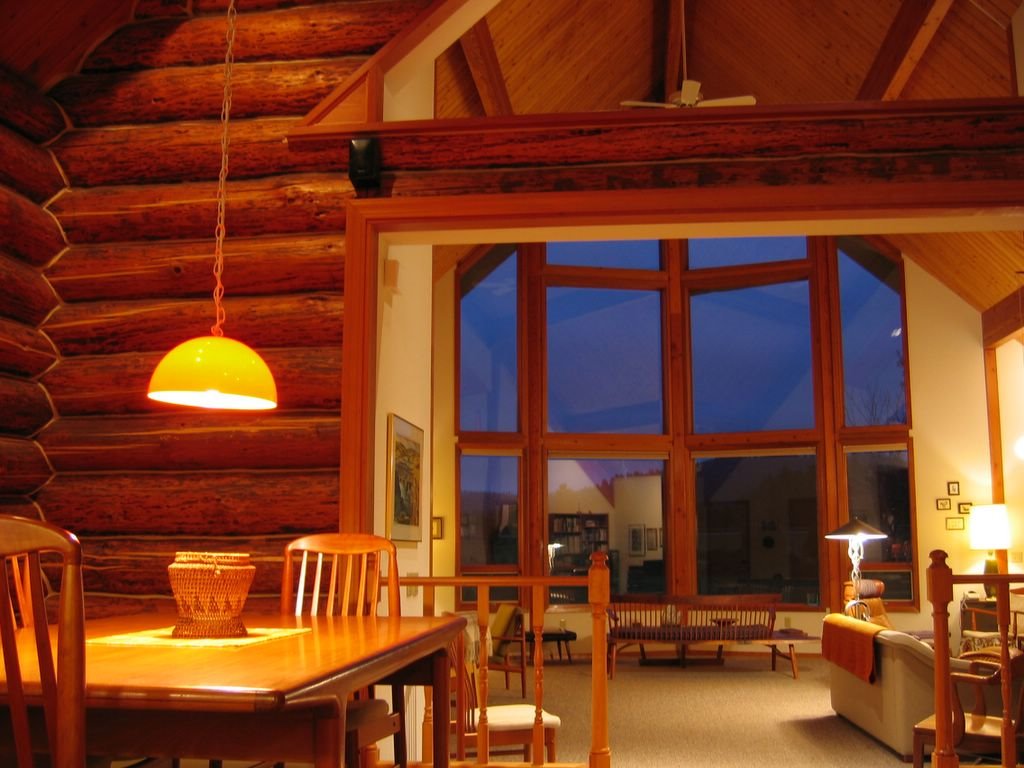
Great Room via the Dining Room. Of course, it'll all look different once we get our furniture.

So much to do!

- Mike (& Corinne)
02 January 2006

Christmas in Tulsa

"Tulsa? Why on earth are you going to Tulsa for Christmas?" That was the typical response we got when we told people of our holiday plans. Well, thankfully the trip was much more enjoyable than any of our friends could envision.


Tor & Clare's first tree!


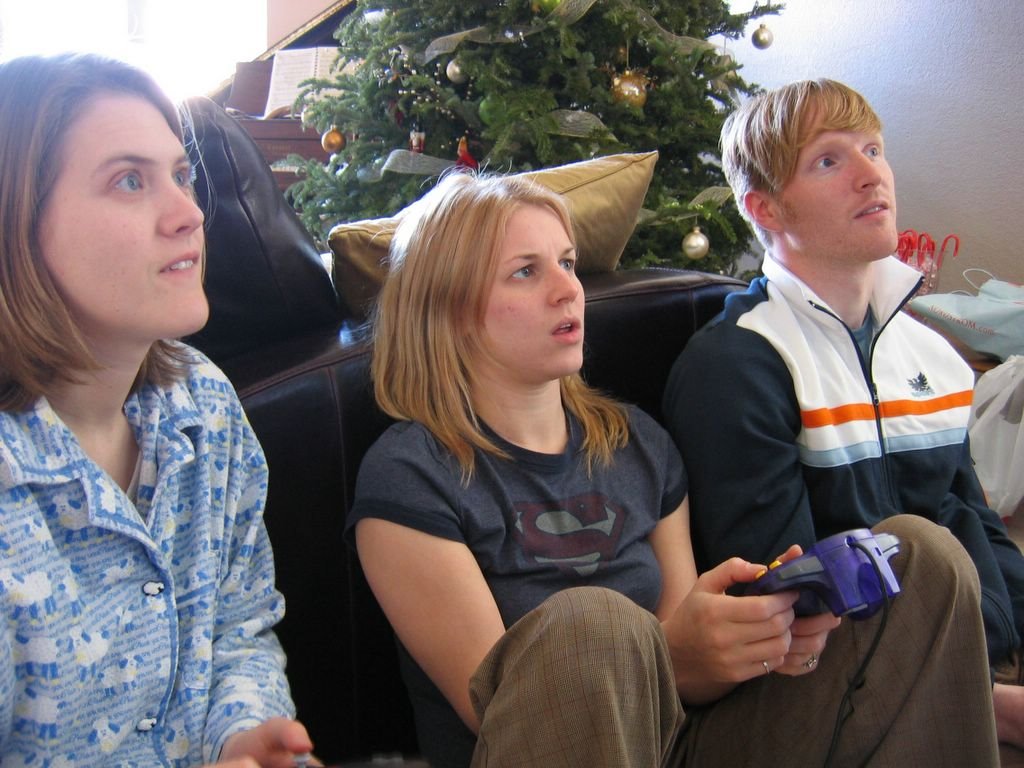
As with most gatherings in Corinne's family, Christmas included many a "game night", 21st century style. Except most of the time it was probably closer to 11am...


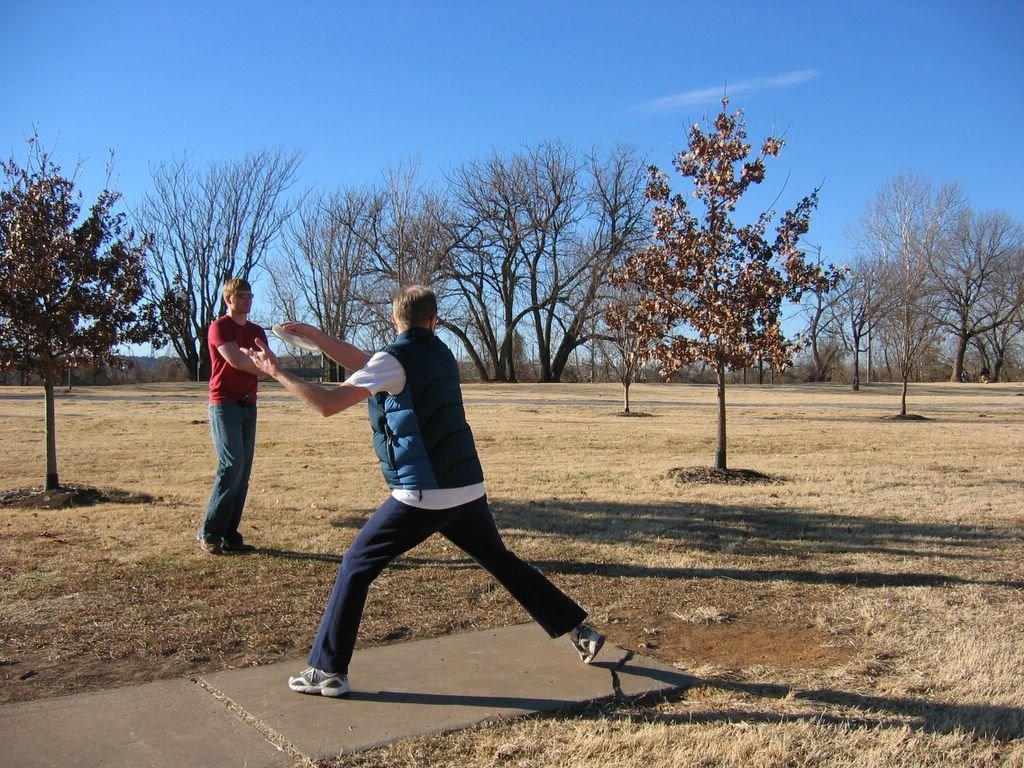
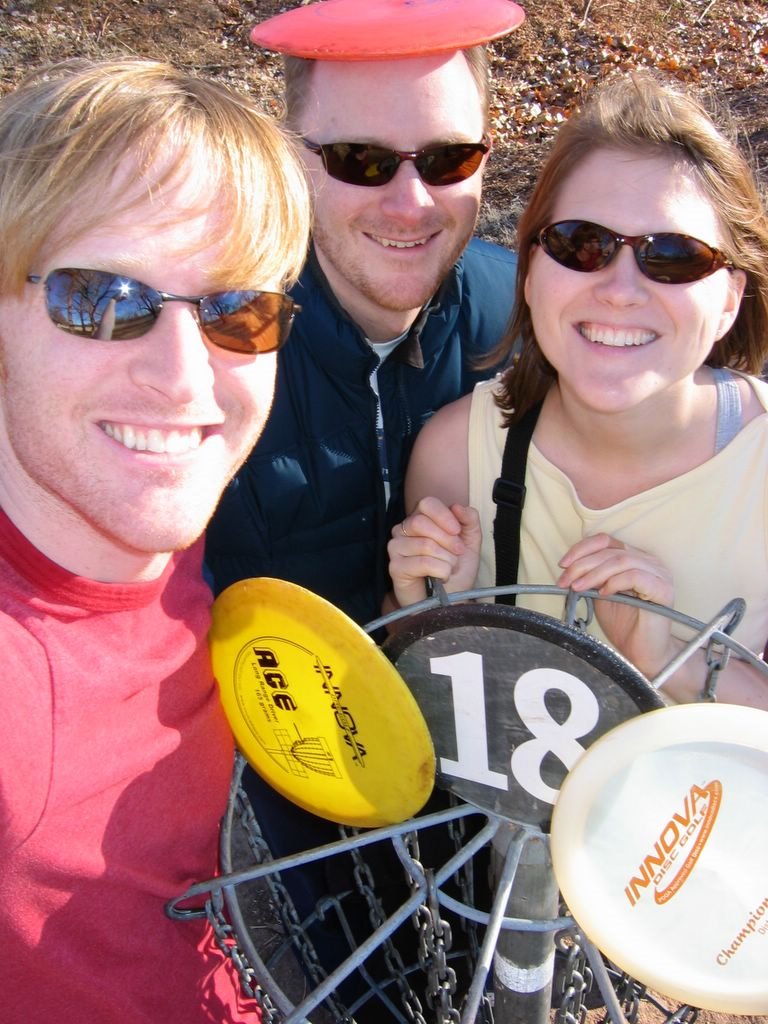
We've certainly played Ultimate Frisbee before, but this was our first experience with an actual ultimate frisbee course. Who'da thunk?


A quick stop for some refreshments, courtesy of Krispy Kreme.


At the Rhema Christmas Lights display. More holiday lights than you've ever seen before in one place.


Several days of our week-long trip were spent helping Loren "get organized". I just hope he keeps it up after we leave!


The hard-working organizers... and Loren.


All crammed in Loren's Lincoln, heading out for dessert.


...and of course, lots of time spent at several of Tor's Nordaggios locations!

- Mike (& Corinne)